

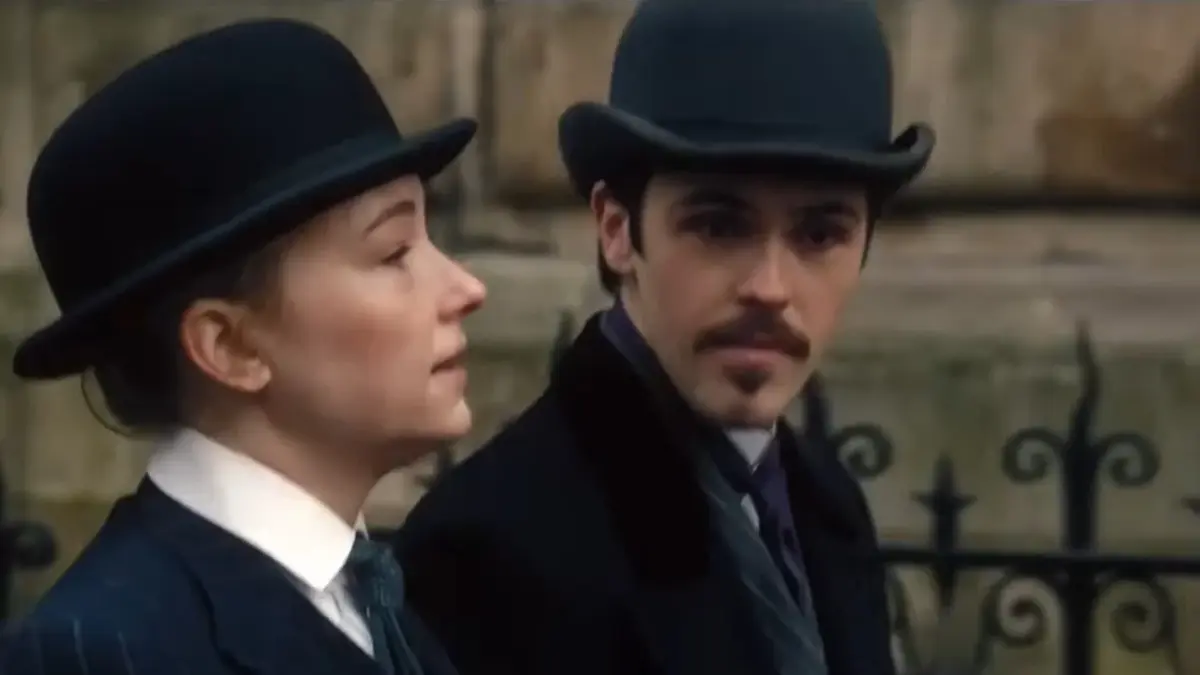
Adapting the work of Virginia Woolf is never a casual undertaking. Her writing layered with introspection, emotional nuance, and social commentary demands a delicate cinematic approach. The newly released Night & Day (2026) official trailer suggests a production that understands this responsibility. Rather than chasing spectacle, it leans into atmosphere, character, and the quiet tensions that define Woolf’s early narrative voice.
As someone deeply familiar with literary adaptations and period cinema, I approached this trailer with cautious optimism. What emerges is a film that appears committed not just to storytelling, but to preserving the intellectual and emotional integrity of its source material.
A First Look at the Trailer
The trailer for Night & Day unfolds with restrained elegance. Set against Edwardian London, it introduces us to a world of rigid social structures, intellectual curiosity, and emotional conflict. The visual palette muted tones, soft lighting, and carefully composed frames immediately signals a production that values authenticity over dramatization.
The characters are presented not through exposition-heavy dialogue but through glances, pauses, and subtle gestures. This aligns beautifully with Woolf’s narrative style, which often prioritizes internal experience over external action.
Understanding the Source Material
Originally published in 1919, Night and Day is one of Woolf’s more traditional novels, especially when compared to her later experimental works like Mrs Dalloway. However, beneath its conventional structure lies a sharp critique of gender roles, societal expectations, and the limitations imposed on women in early 20th-century England.
The story revolves around Katharine Hilbery, a woman caught between intellectual ambition and societal pressure to conform. The trailer hints strongly at this central conflict, portraying her as both contemplative and quietly rebellious.
Themes That Still Resonate Today
1. Gender Roles and Expectations
The trailer subtly emphasizes the constraints placed on women something that remains relevant even in contemporary discourse. Katharine’s struggle feels timeless, reflecting ongoing conversations about autonomy and identity.
2. Love vs. Independence
Rather than presenting romance as a straightforward goal, Night & Day explores its complexities. The emotional tension between personal ambition and romantic commitment is evident throughout the trailer.
3. Intellectual Identity
Woolf’s fascination with the inner lives of her characters is preserved here. The film appears to explore how individuals define themselves intellectually in a world that often prioritizes social conformity.
Cinematic Style and Direction
From a filmmaking perspective, the trailer suggests a director with a strong grasp of restraint. There’s no overuse of dramatic scoring or rapid cuts. Instead, the pacing allows moments to breathe an essential quality when adapting literary material.
The use of natural light, period accurate costumes, and carefully chosen locations enhances the authenticity. This isn’t just a backdrop; it’s a lived-in world that shapes the characters’ decisions and emotions.
Performances: Subtle Yet Powerful
Though the trailer doesn’t reveal the full cast dynamics, the performances already stand out for their understated intensity. The actors rely on minimal dialogue, letting expressions and body language carry emotional weight.
This approach mirrors the psychological depth of Woolf’s writing. Rather than telling the audience what to feel, the film invites interpretation a hallmark of sophisticated storytelling.
Why This Adaptation Matters
Literary adaptations often fall into two traps: either they oversimplify the source material or become inaccessible in their attempt to stay faithful. Night & Day appears to strike a balance between these extremes.
This adaptation matters because it introduces Woolf’s early work to a new generation while respecting its intellectual roots. It doesn’t attempt to modernize the story unnecessarily but instead highlights its enduring relevance.
Final Thoughts
If the trailer is any indication, Night & Day (2026) could become one of the most thoughtful literary adaptations in recent years. It respects its source, trusts its audience, and embraces subtlety in a way that feels increasingly rare in modern cinema.
For viewers who appreciate character-driven storytelling and intellectual depth, this film is shaping up to be essential viewing. And for longtime readers of Virginia Woolf, it offers the promise of seeing a beloved work reimagined with care and precision.
SOURCE: British Film Institute (BFI), IMDB, Wikipedia, Penguin Classics
Keep in Touch For More Updates: www.buzzwithriz.com

2 Comments
Pingback: Citadel Season 2 Trailer Breakdown and Insights | Prime Video
Pingback: The Vampire Lestat Trailer Breakdown and Insights (AMC 2026)