





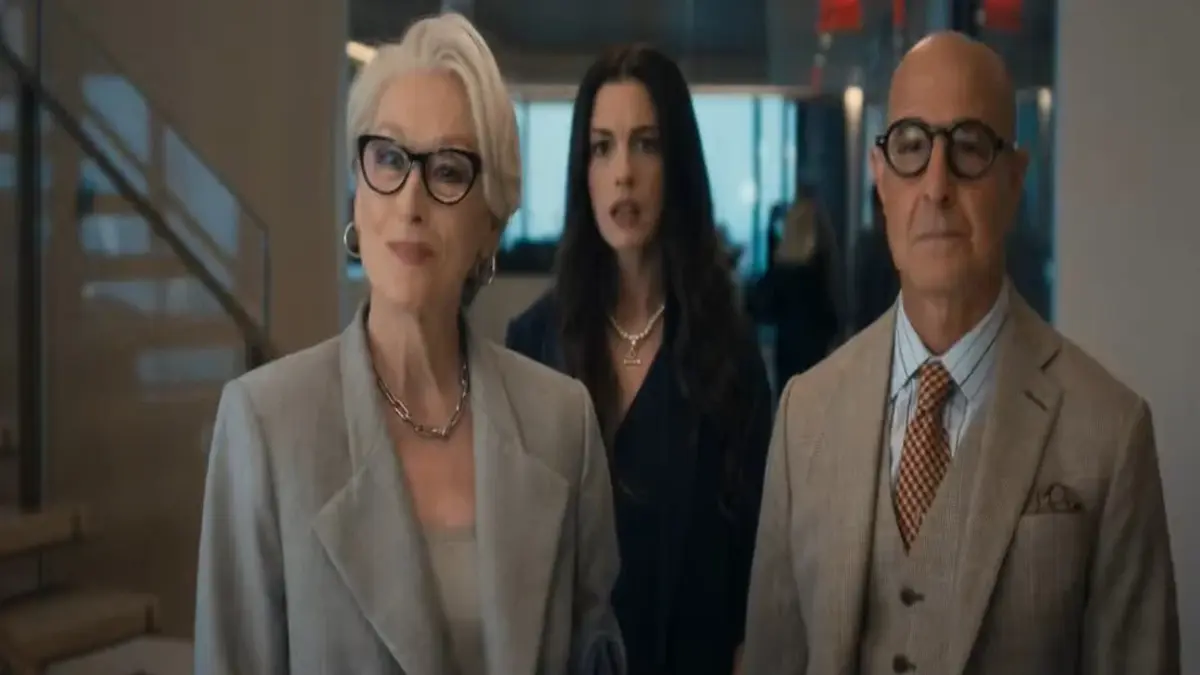
Nearly two decades after The Devil Wears Prada reshaped how Hollywood portrayed ambition, fashion, and female power, the official trailer for The Devil Wears Prada 2 has arrived and it’s already igniting global conversation.
For industry insiders, fashion historians, and pop-culture critics alike, this sequel isn’t just another nostalgia play. It’s a cultural temperature check. Fashion has changed. Media has changed. Power has changed. And so have the women who wield it.
As someone who has followed fashion cinema, luxury media evolution, and the shifting portrayal of women in leadership roles, this trailer signals something deeper than a simple continuation. It suggests a reflection on legacy, relevance, and reinvention.
A Quick Look Back: Why The Devil Wears Prada Still Matters
Released in 2006, The Devil Wears Prada wasn’t merely a workplace drama it became a defining cultural artifact.
The film explored:
- Power dynamics in creative industries
- The cost of ambition
- Fashion as language, not vanity
- Female leadership without apology
Miranda Priestly became iconic not because she was cruel but because she was competent, decisive, and uncompromising in a world uncomfortable with powerful women.
That legacy matters when evaluating what the sequel promises.
The Devil Wears Prada 2 Official Trailer: First Impressions
The trailer opens with controlled elegance muted palettes, architectural interiors, and the familiar precision of fashion’s upper echelon. Immediately, it signals maturity rather than spectacle.
Key Observations:
- The tone is sharper, quieter, more intentional
- Authority replaces intimidation
- Experience replaces insecurity
This is not a return to chaos it’s a return to command.
Character Evolution: Power After Experience
Miranda Priestly: The Quiet Apex of Authority
Miranda’s presence in the trailer is restrained yet commanding. She doesn’t need to raise her voice anymore. Power, here, is implied not enforced.
This reflects a real-world shift in leadership culture:
- From dominance to influence
- From fear to reputation
- From immediacy to legacy
In modern fashion media, figures like Priestly are no longer gatekeepers alone they are institutions.
Andy Sachs: From Assistant to Architect?
One of the most compelling questions teased by the trailer is Andy’s role. The framing suggests parity rather than subordination.
She appears composed, self-possessed, and deliberate. If the first film was about survival, this one looks like it’s about choice.
The sequel seems poised to ask:
What happens when ambition matures into agency?

Fashion as Narrative, Not Costume
Fashion in the trailer functions as storytelling not spectacle.
Visual Themes:
- Tailoring over trends
- Neutral palettes signaling authority
- Minimalism replacing excess
This aligns with current luxury movements:
- Quiet luxury
- Sustainability-driven design
- Editorial restraint
Rather than chasing viral looks, the sequel appears to document the present state of fashion power.
Cultural Relevance in 2026: Why This Sequel Works Now
In 2006, fashion magazines ruled culture. In 2026, they compete with algorithms, influencers, and digital platforms.
The sequel smartly positions itself within this shift.
Likely Themes:
- Legacy media vs digital disruption
- Influence vs authority
- Relevance in a fragmented attention economy
This makes The Devil Wears Prada 2 timely rather than nostalgic.
Industry Accuracy and Authenticity
One reason the original film resonated was its authentic industry texture from deadlines to hierarchies to unspoken rules.
The trailer suggests that realism remains intact:
- Editorial meetings feel lived-in
- Fashion spaces feel functional, not theatrical
- Dialogue is economical, not expositional
This authenticity is crucial for credibility among fashion professionals and cultural critics alike.
Final Verdict: A Sequel That Understands Its Weight
The Devil Wears Prada 2 doesn’t chase relevance it assumes it.
The trailer promises a film that understands:
- Its cultural footprint
- Its audience’s evolution
- Its industry’s transformation
Source: 20th Century Studios, You tube.
Keep in Touch For More Updates: www.buzzwithriz.com


