

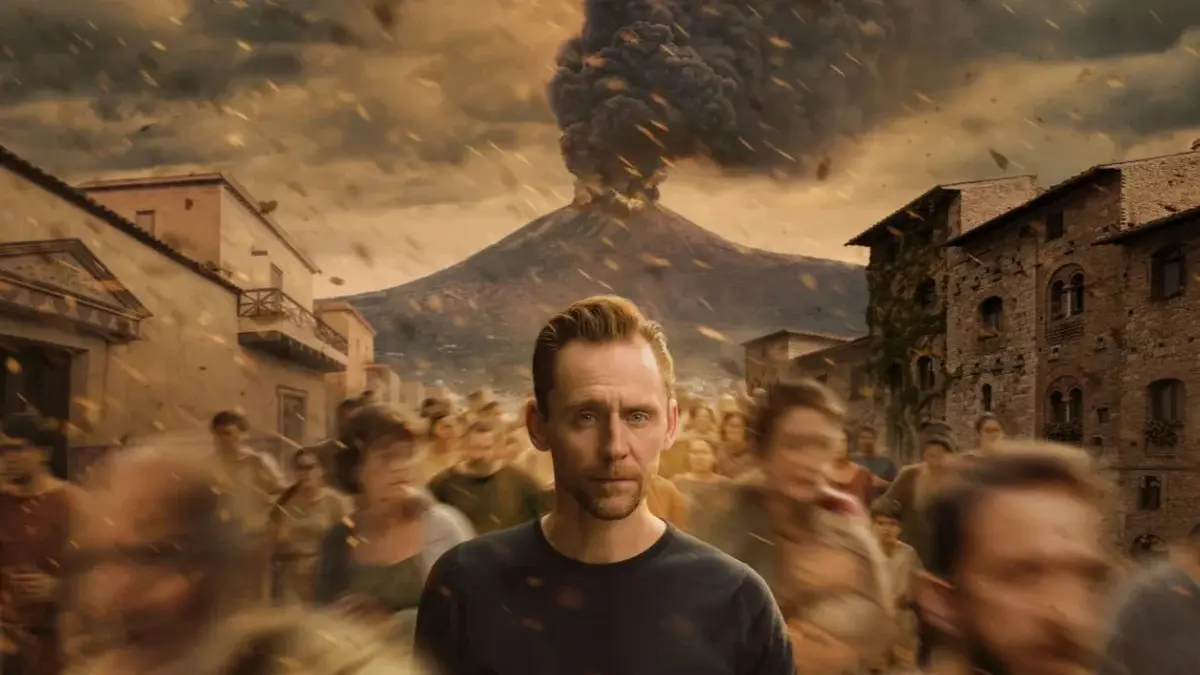
More than 1,900 years after Mount Vesuvius erupted and buried Pompeii beneath layers of volcanic ash, the ancient Roman city continues to captivate historians, archaeologists, and curious travelers around the world. Yet despite centuries of research, Pompeii still holds secrets capable of changing what we thought we knew about life, death, and resilience in the Roman world.
National Geographic’s Pompeii: Out of Time with Tom Hiddleston arrives at a moment when archaeological research is uncovering extraordinary new evidence beneath the ruins. Rather than retelling a familiar disaster story, the documentary explores how modern science is reshaping our understanding of Pompeii and the people who once called it home.
Guided by acclaimed actor Tom Hiddleston, the documentary blends historical investigation, archaeological expertise, and cutting-edge technology to create a compelling journey into one of humanity’s most remarkable time capsules.
For history enthusiasts, archaeology followers, and documentary lovers alike, this production offers something increasingly rare: a chance to see a famous historical event through entirely fresh eyes.
Why Pompeii Still Matters Today
The story of Pompeii is often reduced to a single catastrophic moment the eruption of Mount Vesuvius in AD 79. However, the true significance of Pompeii lies not only in how it was destroyed but also in how it was preserved.
Unlike many ancient cities that gradually disappeared through centuries of rebuilding, Pompeii was frozen in time. Streets, homes, businesses, artwork, inscriptions, and even food remnants survived beneath volcanic debris.
This extraordinary preservation allows researchers to study ancient Roman daily life with a level of detail unavailable almost anywhere else in the world.
The documentary emphasizes that Pompeii is more than an archaeological site. It is a snapshot of an entire civilization captured at a precise moment in history.
Key Insights Explored in the Documentary
- Daily life in ancient Roman society
- Social divisions and cultural diversity
- Scientific analysis of eruption victims
- New archaeological excavations
- Advanced reconstruction technologies
- The continuing mystery of Vesuvius
- Preservation challenges in modern times
Tom Hiddleston’s Role as Storyteller
One of the documentary’s greatest strengths is its choice of host.
Tom Hiddleston approaches the material not as a celebrity presenter but as an engaged investigator. His curiosity helps bridge the gap between expert scholarship and general audiences.
Rather than overwhelming viewers with technical details, the documentary uses Hiddleston’s perspective to ask the questions many viewers would naturally ask themselves:
- Who were the people of Pompeii?
- What were they doing when disaster struck?
- What new evidence are archaeologists discovering today?
- How accurate are traditional accounts of the eruption?
This approach creates an immersive viewing experience while maintaining historical rigor.
The Latest Archaeological Discoveries Changing the Narrative
One of the most fascinating aspects of Pompeii: Out of Time is its focus on recent discoveries.
Modern excavations have revealed that Pompeii still contains significant unexplored areas. New findings continue to challenge long-held assumptions about Roman society and the eruption itself.
Recent excavations have uncovered:
Residential Complexes
Beautifully preserved homes featuring frescoes, mosaics, and architectural innovations that reveal the wealth and sophistication of Pompeii’s residents.
Commercial Spaces
Workshops, bakeries, taverns, and market areas that demonstrate the city’s vibrant economic activity.
Human Stories
Evidence of families, workers, enslaved people, merchants, and travelers whose lives intersected in the final hours before the catastrophe.
Scientific Evidence
Advanced forensic and geological research is helping experts reconstruct the exact sequence of events during the eruption with unprecedented accuracy.
These discoveries move Pompeii beyond mythology and into the realm of lived human experience.
The Science Behind the Vesuvius Eruption
The documentary also excels in explaining the geological forces responsible for the disaster.
For many years, popular culture portrayed Pompeii’s destruction as a simple volcanic explosion. Modern research reveals a far more complex and terrifying sequence of events.
Scientists now understand that multiple eruption phases contributed to the city’s devastation, including:
- Massive ash fall
- Toxic gases
- Pyroclastic density currents
- Extreme heat surges
- Structural collapse
Through visual reconstructions and expert interviews, the documentary illustrates how these phenomena unfolded and why survival became nearly impossible for many residents.
The result is a more nuanced understanding of one of history’s deadliest natural disasters.
Humanizing the Victims of Pompeii
Perhaps the most emotionally powerful element of the documentary is its commitment to restoring individuality to the victims.
For decades, many visitors have viewed Pompeii’s famous plaster casts primarily as archaeological artifacts.
However, recent scientific studies reveal far more about the individuals behind these remains.
Researchers can now examine:
- Diet and nutrition
- Health conditions
- Genetic ancestry
- Occupational backgrounds
- Family relationships
- Migration patterns
These findings demonstrate that Pompeii was a diverse and interconnected city within the Roman Empire.
Instead of anonymous victims, viewers encounter real people with ambitions, relationships, professions, and personal stories.
This human-centered perspective elevates the documentary beyond traditional historical programming.
How Technology Is Transforming Archaeology
Another major theme explored in Pompeii: Out of Time with Tom Hiddleston is the role of technology in modern archaeology.
Innovations now allow researchers to investigate ancient sites without causing unnecessary damage.
Some of the technologies featured include:
3D Laser Scanning
Creating highly accurate digital models of structures and artifacts.
Ground-Penetrating Radar
Identifying buried features before excavation begins.
DNA Analysis
Revealing genetic information and population movements.
Digital Reconstruction
Rebuilding ancient environments using computer-generated imagery.
Geological Mapping
Improving understanding of volcanic activity and eruption dynamics.
These tools are helping experts uncover new layers of information while preserving fragile archaeological remains for future generations.
Why the Documentary Stands Out
History documentaries often struggle to balance education and entertainment.
This production succeeds because it focuses on storytelling rather than sensationalism.
Several factors distinguish it from other historical documentaries:
Evidence-Based Research
The narrative is grounded in current archaeological scholarship.
Strong Visual Presentation
Reconstructed scenes and site footage help audiences visualize ancient life.
Expert Contributions
Leading archaeologists, historians, and scientists provide context and credibility.
Human Perspective
The documentary prioritizes individual experiences rather than abstract historical events.
Contemporary Relevance
Themes of disaster preparedness, resilience, and human vulnerability resonate strongly today.
What Pompeii Teaches Modern Society
Although nearly two millennia separate us from Pompeii’s residents, their story remains surprisingly relevant.
The documentary highlights several lessons that continue to matter today:
Nature’s Power
Modern societies remain vulnerable to natural disasters despite technological advances.
Preservation of Cultural Heritage
Historical sites provide invaluable insights into humanity’s shared past.
Scientific Collaboration
Interdisciplinary research leads to deeper historical understanding.
Human Resilience
Communities throughout history have faced sudden and devastating challenges.
By connecting ancient experiences with contemporary concerns, the documentary transforms Pompeii from a distant historical event into a meaningful reflection on modern life.
Final Thought
Pompeii: Out of Time with Tom Hiddleston is more than a documentary about a volcanic eruption. It is an exploration of humanity preserved across centuries, revealed through science, archaeology, and storytelling.
The production successfully combines expert research, visual sophistication, and emotional depth to create a compelling portrait of one of history’s most studied archaeological sites.
Whether you’re fascinated by ancient Rome, passionate about archaeology, or simply interested in outstanding historical documentaries, this film offers a fresh and insightful perspective on Pompeii.
Most importantly, it reminds us that history is not static. Every excavation, every scientific breakthrough, and every new discovery has the potential to reshape our understanding of the past.
Pompeii may have been buried in AD 79, but its story is still being written.
SOURCE: National Geographic, Disnep +, Hulu, UNESCO World Heritage Centre, Deadline
Keep in Touch For More Updates: www.buzzwithriz.com
Table of contents
- Why Pompeii Still Matters Today
- Key Insights Explored in the Documentary
- Tom Hiddleston’s Role as Storyteller
- The Latest Archaeological Discoveries Changing the Narrative
- Residential Complexes
- Commercial Spaces
- Human Stories
- Scientific Evidence
- The Science Behind the Vesuvius Eruption
- Humanizing the Victims of Pompeii
- How Technology Is Transforming Archaeology
- 3D Laser Scanning
- Ground-Penetrating Radar
- DNA Analysis
- Digital Reconstruction
- Geological Mapping
- Why the Documentary Stands Out
- Evidence-Based Research
- Strong Visual Presentation
- Expert Contributions
- Human Perspective
- Contemporary Relevance
- What Pompeii Teaches Modern Society
- Nature’s Power
- Preservation of Cultural Heritage
- Scientific Collaboration
- Human Resilience
- Final Thought

1 Comment
Pingback: The Man Will Burn HBO Documentary Trailer Breakdown