

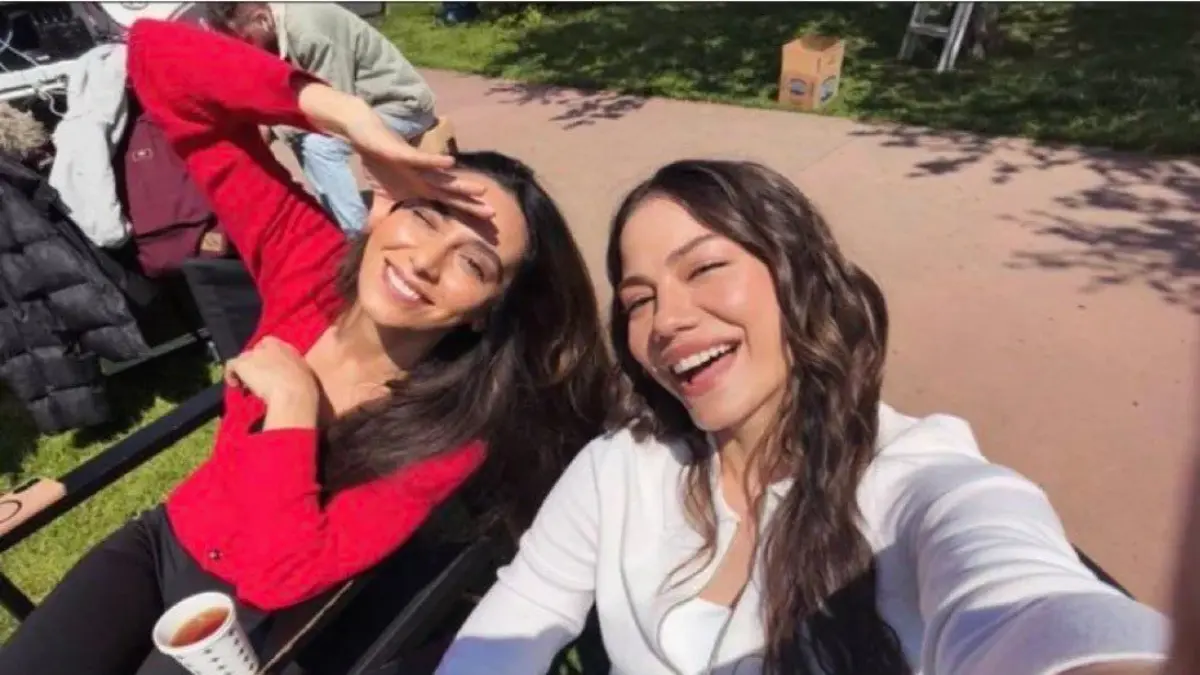
Turkish television continues to dominate international entertainment conversations, and one of the strongest examples of that growing influence is Eşref Rüya. The hit Kanal D drama has quickly become a fan favorite thanks to its emotional storytelling, cinematic production quality, and magnetic cast chemistry. This week, however, it wasn’t just the storyline creating buzz online it was a spontaneous social media moment shared by two of the show’s most talked about stars.
Demet Özdemir, who portrays Nisan in Eşref Rüya, and Ebru Aytemur, who plays Gonca, unexpectedly ignited social media after sharing a playful behind the scenes photo inspired by Gazapizm’s song “Aborjin.” What appeared to be a casual post instantly evolved into a viral fan discussion, proving once again how powerful audience engagement has become in modern Turkish television culture.
The moment resonated far beyond a simple Instagram interaction. Fans interpreted the post as a symbol of female energy, confidence, and on-screen chemistry themes that have increasingly shaped the popularity of contemporary Turkish dramas.
Why the “Aborjin” Post Went Viral
Social media trends rarely happen by accident, especially within the entertainment industry. The post shared by Ebru Aytemur featured a candid photo taken between scenes alongside Demet Özdemir. The caption, “We’re back to work,” seemed simple at first glance, but the inclusion of Gazapizm’s widely recognized track “Aborjin” changed the tone completely.
The song choice immediately connected with younger audiences familiar with the artist’s strong, rebellious lyrical style. Fans quickly began calling the actresses “Eşref Rüya’s Aborigines,” turning the phrase into a viral fandom label across Turkish social media platforms.
What made the moment especially impactful was its authenticity. Instead of a polished promotional campaign, the interaction felt natural and unscripted. In today’s digital entertainment landscape, audiences respond more positively to organic celebrity moments than heavily managed publicity content.
Demet Özdemir’s repost of the image further amplified the trend. Within hours, fan pages on Instagram, X, and TikTok began resharing clips, edits, and reaction posts celebrating the duo’s chemistry.
Comments such as “The real owners of the place” and “Eşref Rüya’s tough girls” flooded the posts, revealing how deeply viewers connect with the personalities behind the characters they watch weekly.
The Growing Cultural Impact of Eşref Rüya
Since its premiere on Kanal D, Eşref Rüya has steadily built a loyal audience not only in Türkiye but also among international viewers who follow Turkish dramas through streaming platforms and social media updates.
The series stands out because it balances emotional storytelling with modern themes of loyalty, ambition, and identity. While many Turkish dramas focus heavily on romance alone, Eşref Rüya adds layers of psychological tension and character development that appeal to broader demographics.
Demet Özdemir’s portrayal of Nisan has especially drawn praise from viewers and critics alike. Known previously for romantic comedy performances, Özdemir demonstrates a more emotionally grounded and mature screen presence in this project. Her transition into deeper dramatic storytelling reflects the evolving expectations placed on leading actresses within the Turkish entertainment industry.
Similarly, Ebru Aytemur’s performance as Gonca has added a refreshing dynamic to the show. Fans frequently describe her character as fearless, emotionally sharp, and fiercely loyal traits that align perfectly with the “tough girl” narrative fans referenced in the viral comments.
This type of audience investment is invaluable for television productions today. Viewers no longer consume entertainment passively; they actively participate in shaping online narratives around their favorite characters and actors.
Demet Özdemir’s Social Media Influence Continues to Grow
Demet Özdemir has long been one of Türkiye’s most influential actresses on social media. Her digital presence combines glamour, professionalism, and relatability a balance that many celebrities struggle to maintain consistently.
Unlike overly curated celebrity accounts, Özdemir’s content often feels approachable and emotionally engaging. That authenticity plays a major role in why even casual posts generate enormous engagement.
Industry analysts increasingly recognize how social media visibility directly affects television success. Viral cast interactions help sustain audience interest between episodes, strengthen fandom communities, and create organic promotional momentum without traditional advertising costs.
In the case of Eşref Rüya, the “Aborjin” trend did more than entertain fans it reinforced the emotional connection viewers feel toward the show’s cast dynamics.
This is especially important in the Turkish drama market, where audience loyalty can significantly influence ratings performance and international distribution opportunities.
The Role of Female Friendship in Modern Turkish Dramas
One of the most compelling aspects of the viral moment is how audiences responded to the bond between Nisan and Gonca rather than focusing exclusively on romance driven narratives.
Turkish dramas have historically centered on intense love stories, but viewers are increasingly embracing strong female relationships and layered friendships as equally compelling storytelling elements.
The reactions to Demet Özdemir and Ebru Aytemur’s post reveal this cultural shift clearly. Fans celebrated the actresses not simply as glamorous celebrities but as symbols of solidarity, confidence, and resilience.
This mirrors broader entertainment trends seen globally, where audiences value multidimensional female characters who support one another while navigating personal and emotional conflicts.
For Eşref Rüya, this dynamic gives the series additional emotional depth and distinguishes it within an increasingly competitive television landscape.
Gazapizm’s “Aborjin” and the Power of Music in TV Culture
Music has always played a critical role in Turkish television culture, and the use of Gazapizm’s “Aborjin” demonstrates how songs can instantly shape audience perception.
Gazapizm, known for socially conscious rap and emotionally intense lyrics, has built a dedicated fan base among younger Turkish audiences. The track’s rebellious energy aligned perfectly with the actresses’ confident pose, turning a simple image into a symbolic cultural moment.
This crossover between music culture and television fandom highlights the evolving nature of digital entertainment ecosystems. A trending song can elevate a television moment, while a television series can simultaneously reintroduce songs to new audiences.
The result is a mutually reinforcing cycle of online engagement that benefits artists, actors, and production companies alike.
Why Fans Connect So Strongly With Behind-the-Scenes Content
Modern audiences crave authenticity more than polished perfection. Behind the scenes moments provide emotional access to productions in ways traditional interviews or promotional trailers often cannot.
When actors share relaxed, candid interactions, viewers feel included in the creative process. This sense of closeness strengthens fandom loyalty and encourages continuous online discussion.
In the case of Demet Özdemir and Ebru Aytemur, fans interpreted the post as evidence of genuine friendship and positive set energy. That perception matters because audiences often associate cast chemistry off screen with stronger performances on screen.
For television producers, this kind of organic fan enthusiasm is incredibly valuable. It creates free publicity, boosts trending visibility, and sustains audience engagement throughout the broadcast season.
Eşref Rüya’s Momentum Ahead of Tonight’s Episode
As Eşref Rüya prepares to air its latest episode tonight on Kanal D, anticipation continues to grow. Social media momentum surrounding the cast has added fresh excitement to the viewing experience, particularly among younger digital first audiences.
Entertainment analysts note that viral cast interactions often contribute to stronger live ratings because fans become emotionally invested in supporting the actors behind the characters.
That momentum appears especially strong for Eşref Rüya, which continues to establish itself as one of the standout Turkish drama productions of the year.
With emotionally charged storytelling, visually cinematic production, and increasingly viral cast moments, the series has successfully positioned itself at the center of Türkiye’s entertainment conversation.
Final Thoughts
The viral “Aborjin” moment shared by Demet Özdemir and Ebru Aytemur may have started as a simple behind the scenes post, but its impact reflects something much larger happening within modern entertainment culture.
Today’s audiences want more than scripted performances they want authenticity, emotional connection, and relatable interactions. The overwhelming response to the actresses’ playful “tough girl” energy proves how powerful those elements can be when combined with a successful television series.
For Eşref Rüya, the moment served as both a viral social media success and a reminder of the series’ growing cultural influence.
As Turkish dramas continue expanding their global reach, cast interactions like these will likely become an increasingly important part of audience engagement strategies. And judging by fan reactions, Demet Özdemir and Ebru Aytemur have already mastered the art of turning spontaneous moments into unforgettable pop culture conversations.
SOURCE: Kanal D, Gazapizm, IMDB, Wikipedia
Keep in Touch For More Updates: www.buzzwithriz.com
Table of contents
- Why the “Aborjin” Post Went Viral
- The Growing Cultural Impact of Eşref Rüya
- Demet Özdemir’s Social Media Influence Continues to Grow
- The Role of Female Friendship in Modern Turkish Dramas
- Gazapizm’s “Aborjin” and the Power of Music in TV Culture
- Why Fans Connect So Strongly With Behind-the-Scenes Content
- Eşref Rüya’s Momentum Ahead of Tonight’s Episode
- Final Thoughts
