

Holiday cinema has long been associated with warmth, nostalgia, and emotional comfort. But every few years, a film arrives that challenges those familiar seasonal emotions and replaces them with tension, silence, and psychological unease. Bitter Christmas (2026) appears ready to do exactly that.
The recently released official US teaser has already generated curiosity among thriller enthusiasts, indie cinema audiences, and viewers who appreciate emotionally intelligent storytelling. Instead of relying on loud jump scares or formula driven suspense, the teaser leans heavily into atmosphere, restrained performances, visual symbolism, and unresolved emotional conflict.
That creative direction alone makes Bitter Christmas stand apart from many modern thriller releases.
From the opening frames, the teaser communicates isolation. Windy landscapes, muted colors, guarded facial expressions, and fragmented emotional cues suggest a film more interested in psychological tension than traditional horror mechanics. The result is a teaser that leaves audiences asking questions rather than offering easy answers.
For film analysts and genre followers, that is often the strongest possible first impression.
A First Look at the Tone of Bitter Christmas (2026)
One of the most striking elements of the Bitter Christmas teaser is its emotional restraint. The film avoids the overstylized editing patterns commonly found in mainstream suspense marketing. Instead, it embraces slower pacing and observational framing.
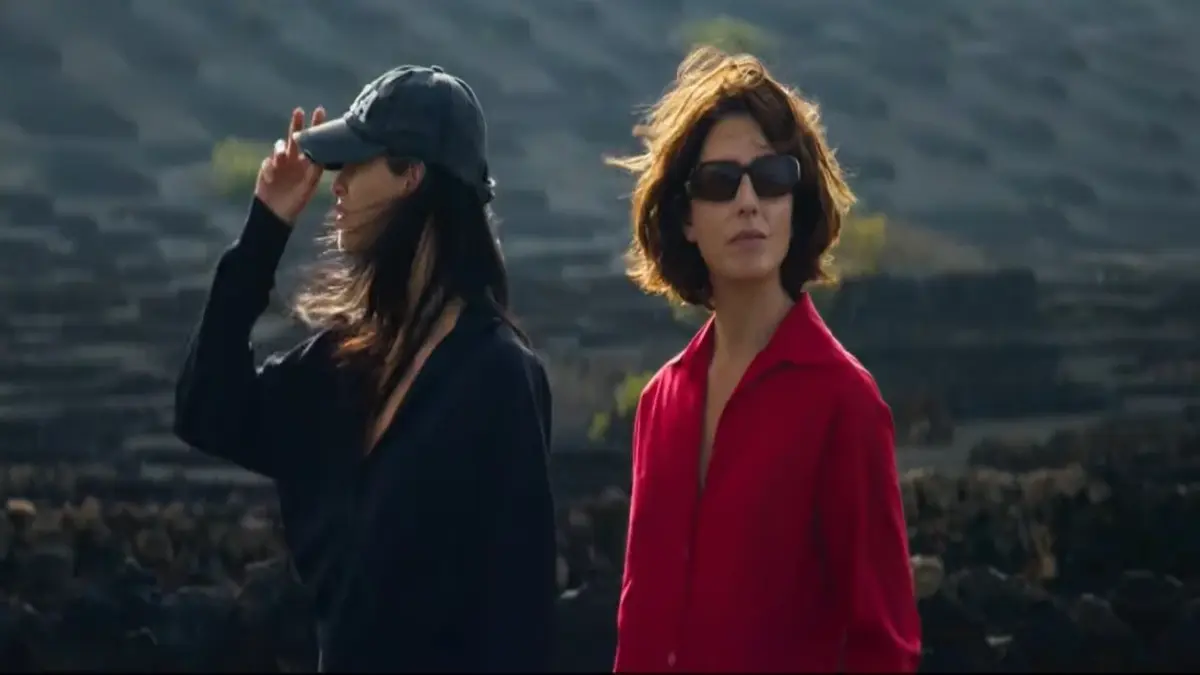
The two women featured prominently in the teaser appear emotionally disconnected despite sharing physical space within the frame. Their body language creates immediate intrigue. One character hides behind a dark baseball cap and oversized clothing, while the other stands composed in a vivid red outfit and sunglasses. The visual contrast feels intentional.
This contrast may symbolize opposing emotional states:
- suppression versus confrontation
- grief versus control
- memory versus denial
- emotional isolation versus public composure
The teaser never explicitly explains these tensions, which ultimately strengthens audience engagement.
Modern viewers increasingly appreciate films that trust their intelligence. Bitter Christmas seems designed for audiences who enjoy interpreting visual storytelling rather than consuming exposition-heavy narratives.
Why the Cinematography Already Feels Distinctive
Cinematography plays a critical role in psychological thrillers, and Bitter Christmas immediately demonstrates a strong visual identity.
The teaser uses:
- soft natural lighting
- desaturated environmental tones
- wide landscape framing
- subtle camera movement
- lingering reaction shots
Together, these techniques create emotional discomfort without relying on conventional horror imagery.
The mountainous outdoor setting becomes more than just a location. It functions as an emotional landscape mirroring the characters’ internal distance. The empty space surrounding them amplifies silence and uncertainty.
There is also a deliberate contrast between darkness and color.
The woman dressed in black blends into the environment, while the red clothing worn by the second character visually interrupts the muted palette. In film language, red frequently symbolizes danger, memory, guilt, suppressed desire, or emotional rupture.
If the teaser’s visual symbolism reflects the full film’s themes, Bitter Christmas may explore trauma through carefully controlled imagery rather than direct dialogue.
That approach aligns closely with acclaimed psychological dramas that prioritize emotional atmosphere over plot driven spectacle.
The Growing Popularity of Psychological Holiday Thrillers
In recent years, audiences have shown increasing interest in darker holiday-themed storytelling. Films and streaming series that combine festive settings with emotional suspense continue attracting strong engagement online.
Part of that appeal comes from emotional contradiction.
Holiday settings traditionally symbolize:
- family connection
- emotional warmth
- celebration
- nostalgia
- reconciliation
Psychological thrillers disrupt those expectations by introducing:
- emotional alienation
- hidden trauma
- fractured relationships
- unresolved grief
- identity conflicts
This collision creates a uniquely unsettling viewing experience.
Bitter Christmas appears positioned perfectly within that evolving genre space.
Instead of presenting Christmas as magical, the teaser frames the season as emotionally complicated and psychologically isolating. That thematic direction feels increasingly relevant for modern audiences seeking mature storytelling.
The strongest thrillers often succeed because they reflect emotional truths rather than relying solely on fear.
Character Dynamics and Unspoken Tension
One reason the teaser has sparked online discussion is the apparent tension between the two central characters.
Even without substantial dialogue, the performances suggest:
- shared history
- emotional distance
- unresolved conflict
- hidden motivations
- emotional surveillance
The woman in red appears observant and composed, while the other character projects avoidance and vulnerability.
That imbalance immediately creates narrative momentum.
Who is hiding something?
Who controls the emotional power within the relationship?
And why does the environment itself feel emotionally hostile?
Psychological dramas become compelling when viewers begin building theories before the film even releases. Bitter Christmas successfully achieves that within a relatively short teaser.
Audience speculation already points toward themes such as:
- estranged family trauma
- identity concealment
- emotional manipulation
- buried holiday memories
- interpersonal betrayal
While none of these theories are confirmed, the teaser deliberately encourages interpretation.
That level of narrative ambiguity is often associated with prestige independent cinema.
Sound Design and Silence as Storytelling Tools
One overlooked strength of the teaser is its sound design.
Rather than overwhelming viewers with dramatic orchestral music, the teaser embraces quiet environmental soundscapes. Wind, distant movement, and restrained audio cues build psychological pressure naturally.
Silence in cinema can be more unsettling than noise.
By withholding emotional release, the teaser creates unresolved tension that lingers after viewing.
This technique has become increasingly effective in modern psychological filmmaking because audiences are conditioned to expect louder pacing and rapid editing.
When a teaser intentionally slows down, viewers subconsciously pay closer attention.
Bitter Christmas appears fully aware of that psychological effect.
The teaser’s editing rhythm suggests a film interested in emotional observation rather than constant narrative explanation.
That creative confidence could become one of the film’s greatest strengths.
Could Bitter Christmas Become a Breakout Indie Thriller?
Independent psychological thrillers have experienced a major resurgence during the streaming era.
Audiences now actively seek:
- atmospheric storytelling
- emotionally layered performances
- visually artistic direction
- slower narrative pacing
- character-driven suspense
Mainstream horror still dominates box office conversations, but critically acclaimed thrillers increasingly succeed through streaming platforms, film festivals, and word of mouth discussion.
Bitter Christmas already shows several indicators associated with breakout indie success:
1. Strong Visual Identity
The teaser establishes a recognizable mood immediately.
2. Emotional Mystery
Viewers are left with questions rather than plot summaries.
3. Cinematic Confidence
The restrained pacing suggests artistic discipline.
4. Psychological Depth
The emotional tension feels layered instead of superficial.
5. Shareable Online Discussion
Ambiguous teasers naturally drive speculation across social platforms.
If the full film maintains the teaser’s atmosphere and narrative intelligence, Bitter Christmas could emerge as one of the most discussed psychological dramas of 2026.
The Importance of Visual Symbolism in Modern Thriller Cinema
Modern audiences increasingly engage with films through visual analysis.
Social media platforms, film podcasts, YouTube breakdowns, and online forums have transformed movie discussion into a global interpretive culture.
As a result, filmmakers now understand that visual details matter more than ever.
The Bitter Christmas teaser appears designed with that reality in mind.
Possible symbolic details include:
| Visual Element | Possible Interpretation |
|---|---|
| Red clothing | danger, memory, guilt |
| Dark oversized clothing | emotional withdrawal |
| Sunglasses | concealment or emotional detachment |
| Empty landscape | isolation and emotional distance |
| Wind and muted lighting | instability and uncertainty |
These details may evolve differently within the final film, but their presence already encourages analytical engagement.
That type of layered visual storytelling often separates forgettable thrillers from culturally discussed cinema.
Audience Expectations Ahead of Release
The teaser has successfully positioned Bitter Christmas as more than a conventional holiday suspense film.
Viewers are now expecting:
- emotionally intelligent storytelling
- nuanced performances
- atmospheric direction
- psychological complexity
- symbolic cinematography
That creates both opportunity and pressure.
Psychological thrillers depend heavily on payoff. If the final narrative delivers emotional depth alongside its mysterious presentation, the film could resonate strongly with critics and audiences alike.
However, audiences today are highly aware of marketing manipulation. A teaser can create anticipation, but long term success depends entirely on narrative execution.
Still, first impressions matter.
And Bitter Christmas has already achieved one of the most difficult goals in film marketing: generating authentic curiosity.
Final Thoughts
Bitter Christmas (2026) already feels like more than a typical holiday thriller. Its haunting visuals, emotional silence, and psychological tension create a teaser that stays with viewers long after it ends. If the full film delivers on its atmospheric storytelling and layered character drama, it could become one of the most talked-about psychological thrillers of 2026.
SOURCE: , IMDb, Rotten Tomatoes, Variety, The Hollywood Reporter, Deadline Hollywood, Screen Daily
Table of contents
- A First Look at the Tone of Bitter Christmas (2026)
- Why the Cinematography Already Feels Distinctive
- The Growing Popularity of Psychological Holiday Thrillers
- Character Dynamics and Unspoken Tension
- Sound Design and Silence as Storytelling Tools
- Could Bitter Christmas Become a Breakout Indie Thriller?
- 1. Strong Visual Identity
- 2. Emotional Mystery
- 3. Cinematic Confidence
- 4. Psychological Depth
- 5. Shareable Online Discussion
- The Importance of Visual Symbolism in Modern Thriller Cinema
- Audience Expectations Ahead of Release

2 Comments
Pingback: Arka Sokaklar’s Emotional Family Story with Ayşecan
Pingback: Dilan Çiçek Deniz at Cannes | Women in Motion Gala