


Yumna Zaidi response to Javeria Saud comment about viral clip Pakistan Television Show.
In the fast-paced world of entertainment, where viral moments can define reputations overnight, even a passing comment can spark widespread debate. The recent controversy involving Yumna Zaidi and Javeria Saud is a textbook example of how humor, when misinterpreted or poorly delivered can ignite serious discussions about professionalism, respect, and media ethics.
This incident didn’t just trend because of celebrity involvement; it struck a deeper chord about authenticity, accountability, and the responsibility that comes with mass communication.
The Viral Moment: What Actually Happened?
During a festive Eid transmission on a private Pakistani TV channel, a seemingly harmless game segment took an unexpected turn. Guests were shown childhood photos of celebrities and asked to identify them a familiar format designed for light entertainment.
However, when a photo incorrectly attributed to Yumna Zaidi appeared, host Javeria Saud added a sarcastic remark suggesting that some actors had been working “since the stone age” but gained fame only recently.
While the audience initially received it as humor, the comment quickly gained traction online, particularly because of its perceived personal undertone.
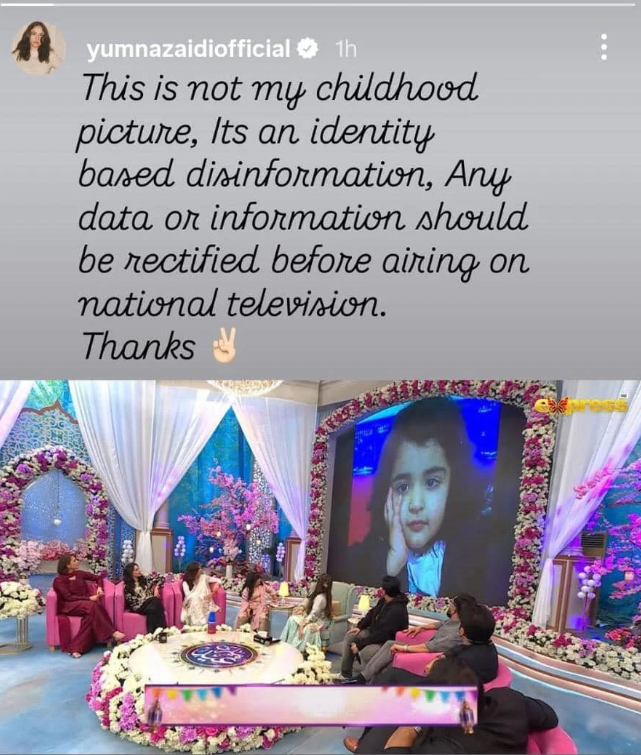
Pakistani Well Known Actress Yumna Zaidi’s Response: Calm Yet Firm
Yumna Zaidi, known for her composed public persona and selective media engagement, addressed the issue via Instagram. Instead of escalating the situation emotionally, she chose a factual and measured approach.
Her statement clarified two key points:
- The image shown was not her childhood photo
- Broadcasting unverified information is irresponsible
This response not only corrected the narrative but subtly shifted the conversation toward media accountability rather than personal conflict.
Why This Controversy Matters
At first glance, this may seem like a minor celebrity disagreement. However, its implications extend far beyond a single remark.
1. Media Verification in the Digital Age
The incident highlights a growing concern: the lack of verification in televised content. In an era where misinformation spreads rapidly, even mainstream media platforms are not immune to errors.
For viewers, television still holds a degree of authority. When incorrect information is presented casually, it risks normalizing inaccuracy.
2. Celebrity Image & Public Perception
Actors like Yumna Zaidi build their careers carefully, often maintaining a balance between privacy and public visibility. A misrepresented image even unintentionally can affect audience perception.
In industries where branding is everything, such missteps can have long-term implications.
3. Humor vs. Respect in Entertainment
Comedy is subjective. What one person finds humorous, another may perceive as offensive. In live or semi-scripted shows, the line between playful banter and personal commentary can blur easily.
Javeria Saud’s comment, whether intended as humor or not, serves as a reminder that public platforms demand heightened sensitivity.
Industry Reactions & Public Opinion
Social media played a significant role in amplifying this controversy. Fans and critics alike weighed in, creating a divided narrative:
- Some defended Javeria Saud, calling it harmless humor
- Others supported Yumna Zaidi, emphasizing professionalism
This split reaction reflects a broader cultural shift audiences are becoming more aware of media ethics and less tolerant of casual misinformation.
The Role of Social Media Amplification
Without social media, this moment might have gone unnoticed. Instead, it became a trending topic within hours.
Platforms like Instagram, Twitter (X), and TikTok have transformed how controversies unfold:
- Clips go viral instantly
- Context often gets lost
- Public opinion forms rapidly
Yumna Zaidi’s response, therefore, was not just timely it was necessary to control the narrative before misinformation spread further.
A Broader Look: Media Ethics in Pakistani Showbiz
This incident opens the door to a larger conversation about ethical broadcasting standards in Pakistan.
Key Concerns Include:
- Lack of fact-checking before airing content
- Over-reliance on improvised humor
- Pressure to create viral moments at any cost
As the industry grows globally, maintaining credibility becomes increasingly important.
The Bigger Picture: Reputation in the Digital Era
In today’s interconnected world, reputation is fragile. A single viral moment can define public perception for years.
Yumna Zaidi’s handling of the situation demonstrates:
- Emotional intelligence
- Professional restraint
- Strategic communication
These qualities are increasingly important for public figures navigating digital scrutiny.
Conclusion: More Than Just a Viral Clip
What started as a lighthearted game segment evolved into a meaningful conversation about media responsibility, celebrity dignity, and audience awareness.
Yumna Zaidi’s response didn’t just address a personal remark it highlighted a systemic issue within entertainment media.
As Pakistani showbiz continues to expand its global footprint, such moments serve as reminders that credibility, respect, and authenticity are not optional they are essential.
Source
- Pakistan Television Official
- Yumna Zaidi’s Official
- IMDB
- Jang News
- Dawn News
Keep in Touch For More Updates: www.buzzwithriz.com
