

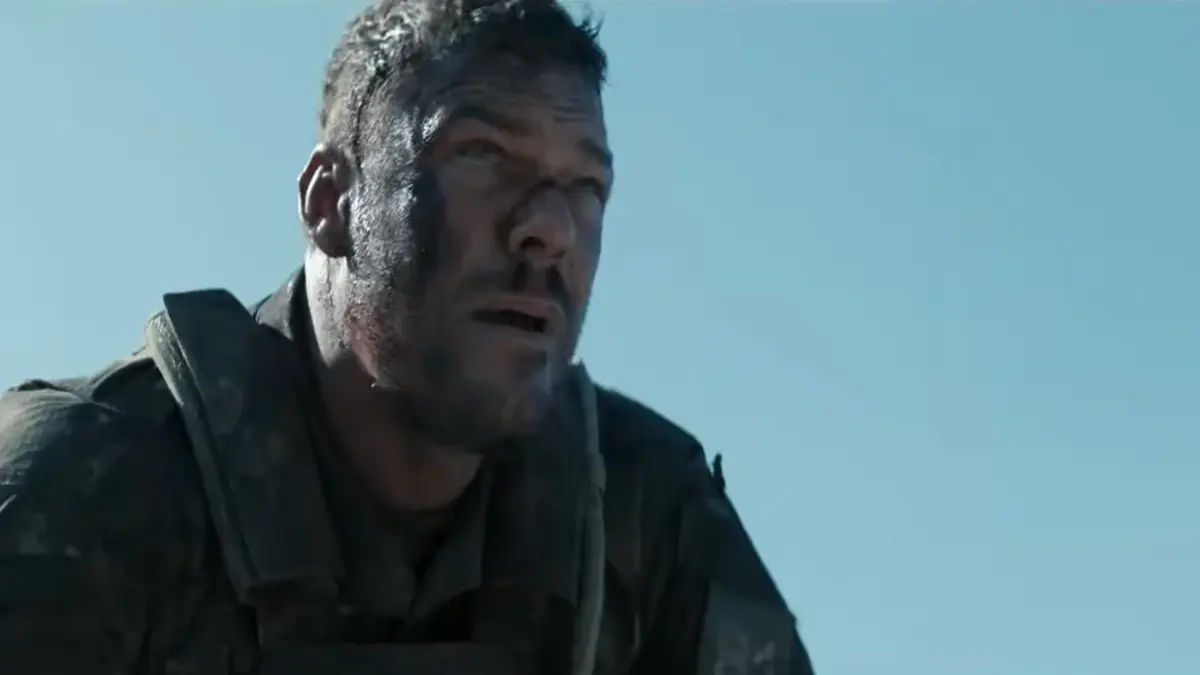
War films often glorify combat, heroism, and sacrifice. War Machine does the opposite and that’s precisely why it matters.
Released on Netflix and directed by acclaimed filmmaker David Michôd, War Machine is not a traditional war movie. Instead, it is a biting political satire that dissects modern military leadership, media manipulation, and the uneasy alliance between war and bureaucracy. Anchored by a deliberately unglamorous performance from Brad Pitt, the film forces viewers to confront how wars are fought not just with weapons, but with press briefings, egos, and political ambition.
This is a film that feels more relevant with time especially in an era shaped by prolonged conflicts, blurred objectives, and performative leadership.
What Is War Machine Really About?
On the surface, War Machine follows General Glen McMahon, a decorated U.S. military commander tasked with stabilizing the war in Afghanistan. Beneath that surface, however, the film explores something far more uncomfortable: how modern wars are sold, managed, and justified.
Rather than focusing on battlefield tactics, the narrative centers on:
- Political optics
- Media relationships
- Civil-military disconnect
- The illusion of control in asymmetrical warfare
The result is a war film that feels eerily close to reality less about combat, more about consequences.
Brad Pitt’s Performance: Controlled, Calculated, and Unsettling
Brad Pitt’s portrayal of General McMahon is intentionally restrained. There are no grand speeches or cinematic hero moments. Instead, Pitt leans into subtle arrogance, insecurity, and blind confidence.
This is not a character study meant to inspire admiration. It’s meant to provoke reflection.
McMahon believes deeply in his mission, yet remains insulated from the human cost of his decisions. Pitt plays him not as a villain, but as a man trapped inside a system that rewards certainty even when certainty is dangerous.
That nuance is what elevates War Machine beyond parody.
A Satire That Refuses to Be Comfortable
Unlike overt comedies, War Machine delivers satire quietly. The humor is dry, sometimes painful, often buried in awkward silences and absurd meetings.
The film’s most powerful moments don’t come from jokes they come from contradictions:
- Military confidence versus political confusion
- Strategic language versus ground-level chaos
- Public messaging versus private doubt
This tonal restraint is intentional. Director David Michôd trusts the audience to recognize the absurdity without being spoon-fed punchlines.
Direction and Writing: David Michôd’s Measured Precision
David Michôd approaches War Machine with journalistic discipline. There is no excessive dramatization, no forced emotional beats.
The screenplay inspired by real-world military leadership dynamics mirrors how power actually functions:
- Slowly
- Bureaucratically
- Often detached from reality
Michôd’s direction emphasizes observation over judgment, allowing viewers to draw their own conclusions.
This commitment to realism strengthens the film’s credibility and aligns it closely with real geopolitical discourse.
Cinematography and Visual Language
Visually, War Machine avoids stylized war imagery. The cinematography favors natural light, muted color palettes, and grounded framing.
Afghanistan is not romanticized. It is presented as vast, complex, and resistant to simple solutions.
The camera frequently lingers on faces rather than action, showing that people fight this war in boardrooms as much as on the ground.
Why War Machine Still Matters Today
In a media landscape saturated with spectacle, War Machine remains relevant because it asks uncomfortable questions:
- Can leaders truly manage modern wars?
- What happens when leadership prioritizes narrative over nuance?
- How much responsibility do institutions bear for systemic failure?
These questions resonate far beyond the Afghan conflict. They apply globally to any nation grappling with intervention, power projection, or political optics.
Critical Reception and Cultural Impact
Upon release, War Machine divided audiences. Some expected a traditional war epic. Others struggled with its restrained pacing.
Yet among critics and political analysts, the film gained appreciation for its honesty and restraint.
Over time, it has found a second life as a case study in modern military storytelling especially relevant in discussions about post-9/11 warfare.
Strengths and Weaknesses
What Works
- Intelligent political satire
- Strong ensemble performances
- Realistic portrayal of military bureaucracy
- Subtle, mature direction
What Doesn’t
- Slower pacing may challenge casual viewers
- Lack of traditional emotional payoff
- Requires audience engagement and patience
Final Verdict: A Necessary Film, Not an Easy One
The creators of War Machine did not design it to entertain in the conventional sense; they designed it to interrogate.
For viewers willing to engage thoughtfully, it offers one of the most honest cinematic examinations of modern warfare available on streaming platforms.
This is not a movie you casually watch it’s one you reflect on.
Source: Netflix, You tube
Keep in Touch For More Updates: www.buzzwithriz.com

1 Comment
Pingback: Boyfriend on Demand: A New Kind of Love Is Coming to Netflix. - buzzwithriz.com