

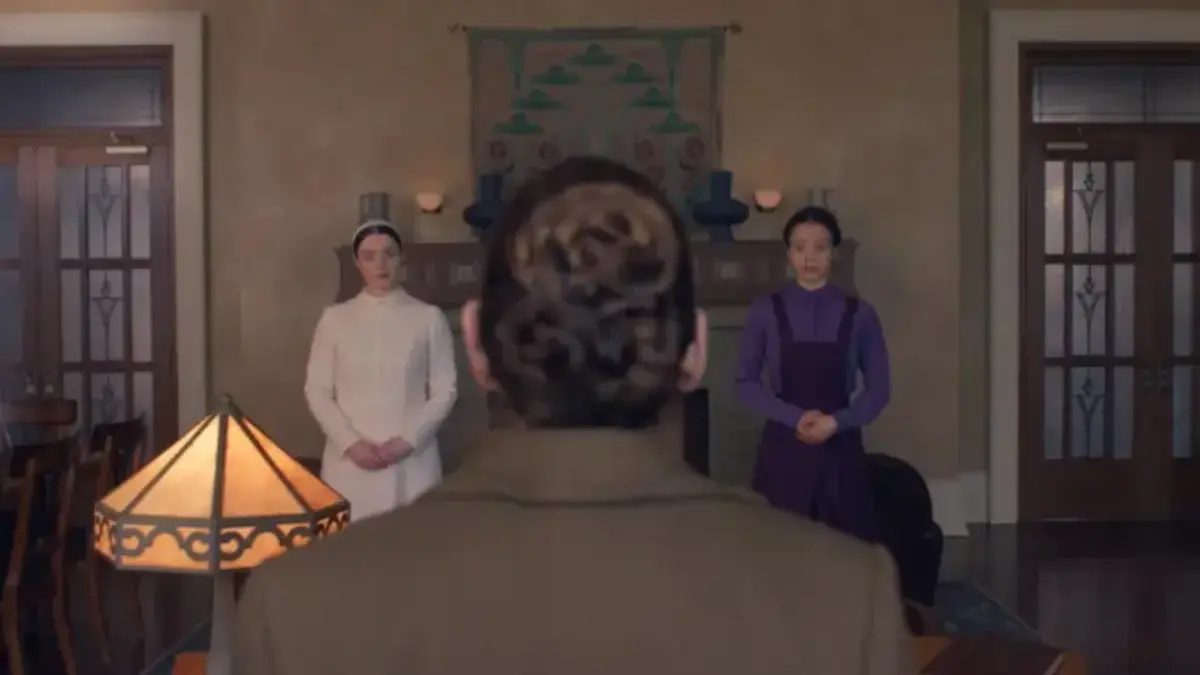
When the first trailer for The Testaments dropped, it immediately reignited the uneasy atmosphere that defined the original dystopian universe. The brief but powerful footage suggests a continuation of the chilling political and social themes that made the earlier series one of the most talked-about dramas of the past decade.
For longtime viewers, the trailer doesn’t simply tease another season or spin-off. Instead, it signals something larger: the expansion of a fictional world that has always mirrored real-world anxieties about power, freedom, and resistance.
Hulu’s upcoming adaptation of The Testaments is based on the bestselling sequel novel written by Margaret Atwood. Set years after the events of the original story, the narrative shifts focus to a new generation growing up within and rebelling against the rigid regime of Gilead.
And if the trailer is any indication, the series will explore darker political intrigue, hidden resistance networks, and the moral complexity of survival under authoritarian rule.
Why the Trailer Matters for Fans of Dystopian Television
Over the past decade, dystopian storytelling has become one of the most powerful genres in television. Shows set in oppressive political systems often resonate deeply with audiences because they explore questions about freedom, identity, and institutional power.
The The Testaments trailer taps directly into that cultural relevance.
Rather than relying solely on shock value, the footage hints at layered storytelling:
- Young women questioning the system they were born into
- Secret alliances forming behind the regime’s facade
- The quiet but growing resistance against authoritarian control
These elements suggest that the new series will focus heavily on generational rebellion and ideological awakening.
In other words, this story isn’t only about surviving Gilead it’s about dismantling it.
A Story Told From Multiple Perspectives
One of the most compelling aspects hinted at in the trailer is the multi-perspective narrative structure.
The sequel story revolves around three central female viewpoints:
- A young woman raised within Gilead’s strict hierarchy
- Another teenager discovering the truth about the regime
- A powerful insider navigating the system’s dangerous politics
This narrative structure allows the story to explore Gilead from both the inside and outside.
Instead of a single protagonist, the story becomes a political mosaic of power, resistance, and identity.
The trailer subtly suggests this complexity through visual contrasts scenes of strict ceremonial order alongside moments of quiet rebellion and uncertainty.
Familiar Yet Evolving
Visually, the trailer maintains the iconic aesthetic that defined the earlier dystopian series:
- muted color palettes
- stark architecture
- religious symbolism embedded into everyday life
But there’s also a noticeable shift.
The imagery hints at a slightly more modernized world a society that has evolved over time while maintaining its rigid ideology.
That visual evolution reflects the timeline of the story, which takes place roughly fifteen years after the original events.
This passage of time allows the narrative to examine how authoritarian systems sustain themselves and how they eventually begin to fracture.
Themes Emerging from the Trailer
Even in its short runtime, the trailer hints at several major themes likely to shape the series.
1. The Power of Memory
Many characters in the story grew up without knowledge of the world before Gilead. Their understanding of reality is shaped by propaganda and controlled information.
The series will likely explore how truth emerges in environments designed to suppress it.
2. Resistance Through Knowledge
Education and hidden knowledge appear to play a crucial role in the narrative.
As characters begin to question their upbringing, they uncover pieces of a broader resistance movement working quietly behind the scenes.
3. Moral Complexity
Unlike simple good-versus-evil narratives, the story thrives in gray areas.
Some characters serve the regime while secretly undermining it. Others struggle with loyalty, survival, and guilt.
The trailer hints that ethical dilemmas will drive much of the drama.
Expanding the Universe of the Story
The original dystopian narrative focused heavily on the personal experience of oppression within Gilead.
The sequel, however, appears to broaden the scope dramatically.
The trailer suggests we may see:
- international political tensions surrounding Gilead
- underground escape networks
- cross-border resistance movements
- secret intelligence operations
This expansion transforms the story from a personal survival drama into a geopolitical thriller.
For viewers, that shift means a richer and more layered narrative world.
Why The Testaments Could Become Hulu’s Next Major Hit
Streaming platforms today compete not only on quantity of content but on cultural impact.
For Hulu, this sequel series represents an opportunity to revive a critically acclaimed universe while introducing it to a new generation of viewers.
Several factors make the project particularly promising:
Built-In Audience
Millions of viewers are already invested in the dystopian world established earlier.
Award-Winning Source Material
The sequel novel received major literary recognition, which adds credibility to the adaptation.
Timely Political Themes
Stories about authoritarianism, resistance, and personal freedom remain deeply relevant in modern global conversations.
Audience Expectations and Fan Theories
Since the trailer’s release, fans across social media and discussion forums have already begun speculating about key storylines.
Some common theories include:
- hidden resistance leaders operating inside Gilead
- secret identities of key political figures
- potential connections between characters from earlier stories
- dramatic power struggles within the ruling elite
These fan discussions demonstrate how deeply audiences remain invested in the world’s mythology.
The Cultural Legacy of the Gilead Universe
Few fictional worlds have had as significant a cultural impact as the dystopian society portrayed in this franchise.
The imagery and themes have appeared in:
- academic discussions about gender politics
- public demonstrations advocating for women’s rights
- broader debates about authoritarian governance
By continuing this narrative, the sequel series doesn’t simply extend a storyline it contributes to an ongoing cultural conversation.
Final Thoughts
Trailers often function as marketing tools, but occasionally they serve another purpose: signaling that a story still has something important to say.
The The Testaments trailer suggests exactly that.
Rather than repeating familiar plotlines, the new series appears ready to explore how oppressive systems evolve and how resistance grows in unexpected places.
For audiences who were captivated by the original story’s emotional intensity and political commentary, this sequel may deliver an even more expansive and thought-provoking narrative.
If executed well, The Testaments could become one of the most compelling dystopian dramas of the streaming era.
Source: Hulu Official Platform, Penguin Random House, The Guardian Books
The Hollywood Reporter, IMDB
Keep in Touch For More Updates: www.buzzwithriz.com
Table of contents
- Why the Trailer Matters for Fans of Dystopian Television
- A Story Told From Multiple Perspectives
- Familiar Yet Evolving
- Themes Emerging from the Trailer
- 1. The Power of Memory
- 2. Resistance Through Knowledge
- 3. Moral Complexity
- Expanding the Universe of the Story
- Why The Testaments Could Become Hulu’s Next Major Hit
- Built-In Audience
- Award-Winning Source Material
- Timely Political Themes
- Audience Expectations and Fan Theories
- The Cultural Legacy of the Gilead Universe
- Final Thoughts
