

By the time Fallout Season 1 Episode 5, titled “The Past,” fades to black, it becomes clear that this series isn’t just adapting a beloved game franchise it’s redefining it. Rather than leaning on spectacle or nostalgia alone, Episode 5 dares to slow down. It asks viewers to sit with memory, loss, and accountability in a world that has spent over two centuries trying to bury its mistakes beneath irradiated dust.
As someone who has followed Fallout lore since the early games and analyzed post-apocalyptic narratives across television and film, this episode stands out as a turning point. “The Past” doesn’t move the plot forward aggressively but it deepens everything. Characters gain emotional weight. Vault-Tec’s moral rot becomes more personal. And the wasteland feels, for the first time, haunted not just by monsters—but by regret.
Episode Overview: What “The Past” Is Really About
At its core, Episode 5 is not about survival it’s about reckoning.
While previous episodes focused on chaos, discovery, and world-building, “The Past” pivots inward. The narrative explores how characters are shaped and often broken by choices made long before the bombs fell.
Key themes include:
- Generational guilt and responsibility
- The psychological cost of Vault-Tec’s experiments
- Identity in a world built on lies
- Memory as both weapon and burden
This episode is a deliberate tonal shift, and that’s exactly why it works.
Character Spotlight: A Quiet Performance with Massive Impact
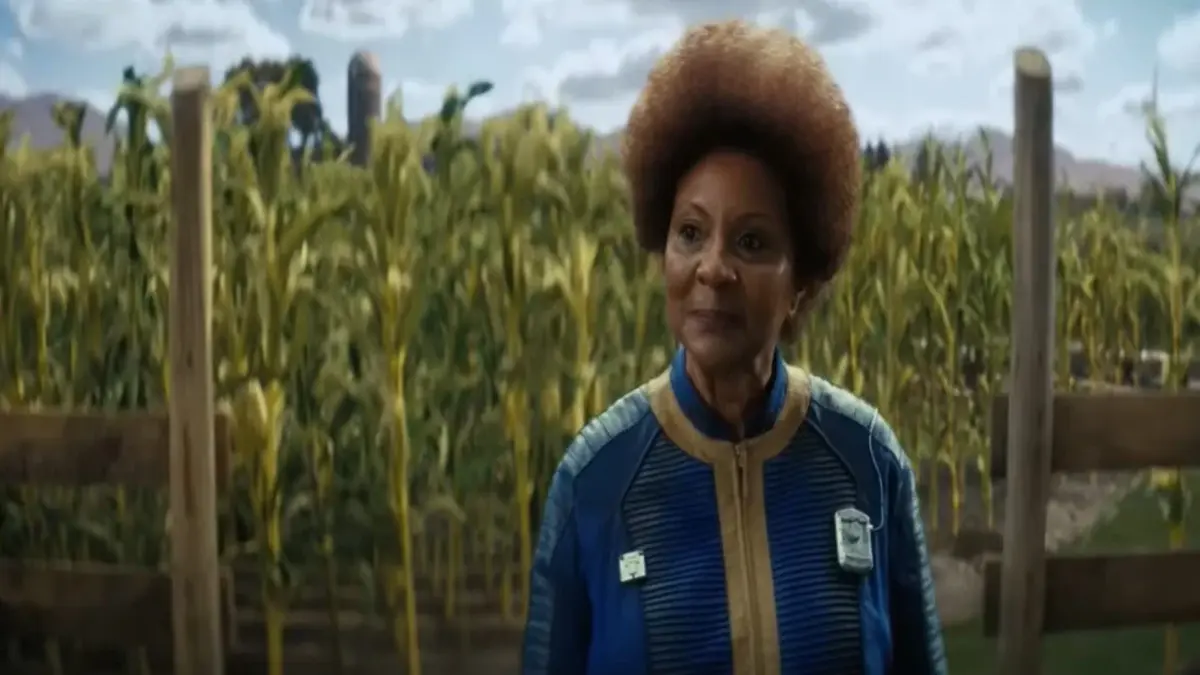
One of the episode’s strongest elements is its restrained performances. The character shown in the attached image standing calmly before a field that symbolizes controlled growth amid destruction embodies the episode’s message perfectly.
Her presence represents:
- Authority built on survival, not power
- A generation that remembers the truth before the fallout
- Emotional intelligence over brute force
Unlike traditional post-apocalyptic leaders, she doesn’t rule through fear. She leads through memory. And in Fallout’s universe, that’s far more dangerous.
Vault-Tec Lore Deep Dive: Subtle but Devastating Revelations
Longtime Fallout fans will appreciate how Episode 5 handles Vault-Tec lore. Instead of exposition dumps, the episode relies on implication trusting the audience to connect the dots.
What we learn:
- Vault-Tec didn’t just experiment physically they manipulated identity and memory
- “Safety” was always conditional
- The past wasn’t erased it was archived
This aligns with established Fallout canon while adding emotional realism that the games could only imply through terminals and holotapes.
Why Episode 5 Is the Emotional Core of Fallout Season 1
If Fallout Season 1 were a novel, Episode 5 would be the chapter readers return to.
Here’s why:
1. It Humanizes the Apocalypse
The episode strips away spectacle and focuses on people aging, remembering, regretting.
2. It Reframes the Villains
Vault-Tec isn’t just evil; it’s bureaucratically monstrous, which feels uncomfortably familiar.
3. It Elevates the Writing
Dialogue is restrained, purposeful, and layered. Nothing feels wasted.
Visual Storytelling: Meaning Over Mayhem
Visually, “The Past” uses contrast brilliantly.
- Green crops against wasteland soil
- Clean Vault suits beside weathered faces
- Calm framing in emotionally volatile moments
These choices reinforce the idea that civilization didn’t end with the bombs it rotted slowly, from the inside out.
Analytical Perspective: Fallout as a Mirror of Modern Anxiety
What makes Episode 5 resonate globally is its relevance.
In an era defined by:
- Corporate overreach
- Data manipulation
- Historical revisionism
“The Past” feels less like science fiction and more like cautionary realism. Fallout isn’t warning us about nuclear war it’s warning us about unchecked systems that outlive accountability.
This is where the show transcends adaptation and becomes commentary.
How Episode 5 Sets Up the Rest of the Season
Narratively, Episode 5 is a hinge.
After this:
- Character motivations feel earned
- Conflicts become ideological, not just physical
- The stakes shift from survival to truth
It prepares the audience for harder choices ahead and ensures those choices will hurt.
Source: Prime Video, Amazon prime, You tube
Keep in Touch For More Updates: www.buzzwithriz.com
