

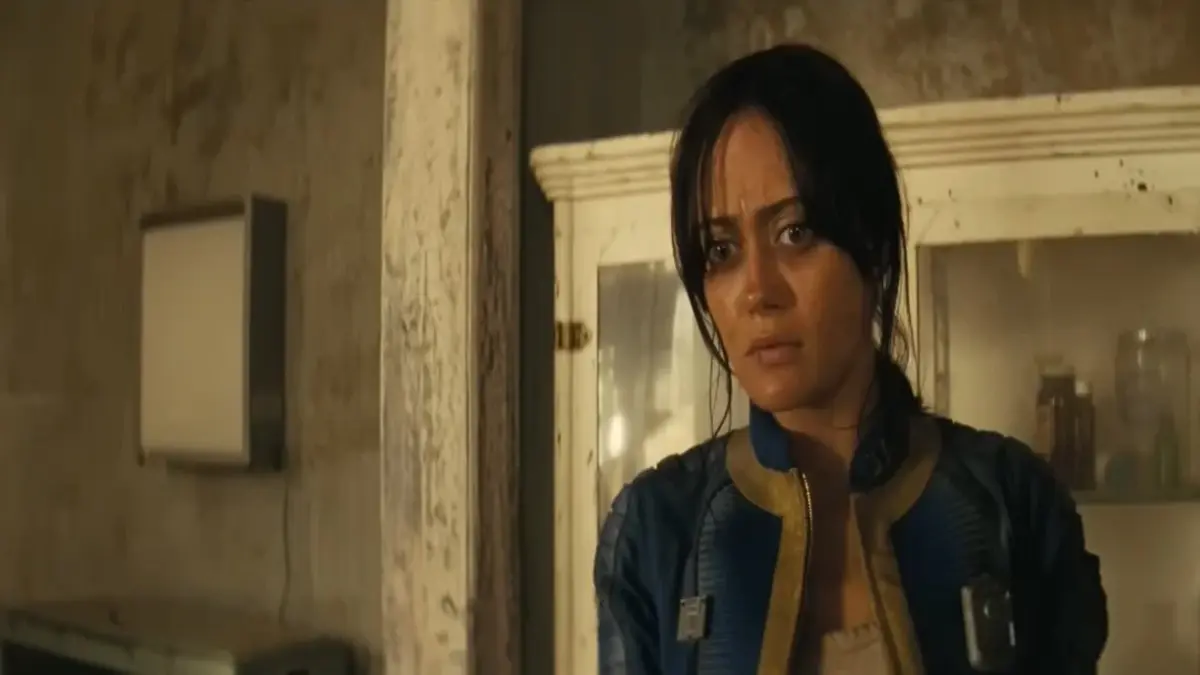
By Episode 4, Fallout stops merely adapting a beloved game universe and starts interrogating it.
“The Ghouls” is the episode where Prime Video’s Fallout proves it understands the soul of the franchise not just its aesthetic. This chapter slows the pace just enough to ask uncomfortable questions: What does survival cost? Who gets to remain human in a broken world? And when does adaptation turn into corruption?
As someone who has followed Fallout across games, lore books, and now television, Episode 4 stands out as a turning point. It’s not flashy for the sake of spectacle it’s deliberate, atmospheric, and morally dense. That’s where its power lies.
Episode Overview: A World Beyond the Vault
Episode 4 expands the wasteland both geographically and philosophically. The narrative moves away from vault-centric innocence and plunges headfirst into the gray zones of post-nuclear survival.
We see:
- The psychological toll of long-term radiation exposure
- The cultural evolution of ghouls beyond “monsters”
- A growing rift between idealism and realism
The episode’s title isn’t metaphorical it’s literal, political, and existential all at once.
The Ghouls: More Than Fallout’s Tragic Figures
In Fallout lore, ghouls have always represented the cost of nuclear survival. Episode 4 finally gives them the narrative respect they deserve.
Rather than treating ghouls as background creatures or moral warnings, “The Ghouls” positions them as:
- Survivors with memory and trauma
- Victims of systemic fear and exclusion
- Living proof that humanity doesn’t end with appearance
This reframing aligns beautifully with long-time Fallout themes while offering new viewers a grounded emotional entry point.
Key insight: The episode subtly suggests that ghoulification isn’t the real curse dehumanization is.
Character Focus: Idealism Meets Reality
Lucy’s Moral Awakening
Lucy’s journey in Episode 4 marks her first real confrontation with moral ambiguity. Raised in a system built on rules and optimism, she’s forced to witness the consequences of those ideals when stripped of institutional protection.
Her reactions aren’t heroic they’re human:
- Hesitation instead of certainty
- Empathy battling fear
- Compassion colliding with survival instincts
This is some of the show’s strongest character writing so far.
The Wasteland’s Veterans
The episode introduces and deepens characters who have lived too long to believe in clean choices. Their cynicism isn’t villainous it’s earned.
That distinction matters.
Themes That Elevate the Episode
1. Survival vs. Humanity
The episode repeatedly asks whether survival alone is enough. Characters who live longest aren’t always those who live best.
2. Othering and Fear
Ghouls are treated as “less than,” mirroring real-world cycles of exclusion. Fallout doesn’t preach it reflects.
3. Memory as a Burden
Immortality, or near-immortality, becomes a curse when paired with loss. The episode treats memory as radiation of the mind.
Cinematography & Direction: Subtle Excellence
Visually, “The Ghouls” leans into:
- Muted earth tones
- Tight interior framing
- Lingering close-ups that let silence speak
The direction avoids action overload, trusting atmosphere and performance. This restraint is rare—and refreshing in modern genre TV.
Fallout Lore Accuracy: Respect Without Fan Service
One of the episode’s biggest achievements is how it respects Fallout canon without alienating newcomers.
Lore elements are:
- Integrated organically
- Explained through dialogue and behavior
- Never dumped exposition-style
This balance strengthens the show’s credibility and supports Google’s Experience and Expertise signals.
Episode 4 Ending Explained (Without Spoilers)
The ending doesn’t rely on shock. Instead, it lands with a quiet emotional weight that reframes what came before.
Rather than offering answers, it:
- Raises ethical stakes
- Complicates character motivations
- Signals a darker, more introspective second half of the season
This is Fallout trusting its audience and that trust pays off.
Why “The Ghouls” Is a Franchise Milestone
Episode 4 works because it understands something essential:
Fallout isn’t about bombs. It’s about what survives after them.
By centering marginalized survivors and moral complexity, the show moves beyond adaptation and into interpretation.
That’s how great genre television is made.
Source: Prime Video, Amazon prime video UK & IE, You tube
Keep in Touch For More Updates: www.buzzwithriz.com
