

Faces of Death 2026 Red Band trailer analysis here Horror cinema has always pushed boundaries but few titles have carried the controversial weight of Faces of Death. Now, in 2026, the franchise returns with a bold, reimagined vision that feels less like a remake and more like a cultural reset.
The newly released Red Band trailer signals something unmistakable: this is not nostalgia-driven horror. It’s calculated, psychological, and disturbingly relevant. From its unsettling imagery to its grounded realism, the film appears designed to provoke not just scare.
For longtime horror enthusiasts and newcomers alike, this revival raises a key question: can Faces of Death (2026) redefine shock horror in an era where audiences are harder to disturb than ever?
Trailer First Impressions: Raw, Unfiltered Terror
The Red Band trailer wastes no time establishing tone. It opens with a slow, almost quiet tension before plunging viewers into a sequence of deeply uncomfortable visuals. Unlike traditional horror trailers that rely on jump scares, this one leans heavily into atmosphere.
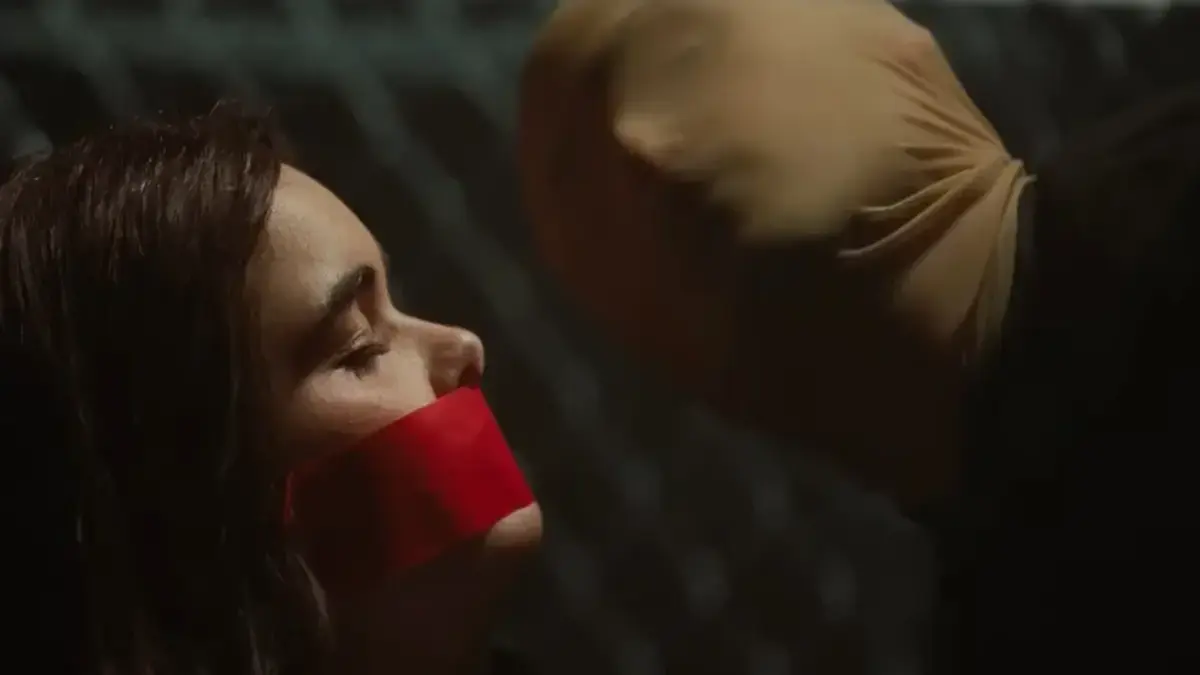
The scene you’ve shared featuring a restrained individual with a red gag perfectly encapsulates the film’s direction. It’s intimate, claustrophobic, and emotionally invasive. There’s no escape, and that’s precisely the point.
Key Observations:
- Minimal use of music sound design drives fear
- Close-up cinematography to create discomfort
- Emphasis on realism over supernatural elements
- Psychological dread replacing cheap shock tactics
This approach aligns with modern horror trends, where storytelling and emotional tension outweigh gore for impact.
Themes and Symbolism: More Than Just Shock
At its core, Faces of Death (2026) appears to explore deeper themes beyond surface level brutality. The trailer hints at commentary on media consumption, desensitization, and the human fascination with violence.
1. Voyeurism and Digital Culture
The original films were infamous for blurring the line between reality and fiction. This reboot seems to modernize that idea by reflecting today’s obsession with viral content and real-life tragedy.
2. Control and Power Dynamics
Scenes of restraint and silence suggest themes of dominance and helplessness. These are not just physical struggles they’re psychological.
3. Desensitization to Violence
In an age where disturbing content circulates freely online, the film appears to question. have we become too comfortable watching suffering?
A Shift Toward Psychological Horror
One of the most striking aspects of the trailer is its visual language. The film avoids over-polished aesthetics and instead opts for a gritty, almost documentary style realism.
Visual Techniques Used:
- Handheld camera work for immersion
- Muted color palettes to enhance bleakness
- Tight framing to create emotional pressure
- Natural lighting for authenticity
This stylistic choice places the audience inside the experience rather than allowing them to observe from a safe distance.
Horror Evolution: From Exploitation to Art
The original Faces of Death films were controversial for their pseudo-documentary format and graphic content. While they gained cult status, they were often criticized for prioritizing shock over substance.
The 2026 version appears to be correcting that imbalance.
What’s Different Now:
| Then | Now |
|---|---|
| Shock value driven | Story-driven horror |
| Exploitation focus | Psychological exploration |
| Controversy-led marketing | Artistic credibility |
| Detached viewing | Immersive experience |
This evolution mirrors the broader transformation of the horror genre, where films like elevated horror have redefined audience expectations.
Why This Film Matters Now
The timing of this release is not accidental. In a world saturated with real world violence streamed across platforms, Faces of Death (2026) feels eerily relevant.
It taps into:
- The ethics of consuming disturbing content
- The blurred line between reality and entertainment
- Society’s growing emotional numbness
Rather than simply presenting horror, the film appears to challenge the viewer’s role in it.
Final Thoughts
Faces of Death (2026) is shaping up to be more than just a remake it’s a statement. The Red Band trailer suggests a film that isn’t interested in easy scares or nostalgic callbacks. Instead, it aims to confront audiences with uncomfortable truths.
This is horror that lingers. Horror that questions. Horror that refuses to let you look away.
If the final film delivers on the promise of its trailer, it could mark a defining moment in modern horror one where shock is no longer the goal, but the consequence of something far deeper.
SOURCE: The Hollywood Reporter, IMDB, Rotten Tomatoes, Variety
Keep in Touch For More Updates: www.buzzwithriz.com
Table of contents
- Trailer First Impressions: Raw, Unfiltered Terror
- Key Observations:
- Themes and Symbolism: More Than Just Shock
- 1. Voyeurism and Digital Culture
- 2. Control and Power Dynamics
- 3. Desensitization to Violence
- A Shift Toward Psychological Horror
- Visual Techniques Used:
- Horror Evolution: From Exploitation to Art
- What’s Different Now:
- Why This Film Matters Now
- Final Thoughts
