

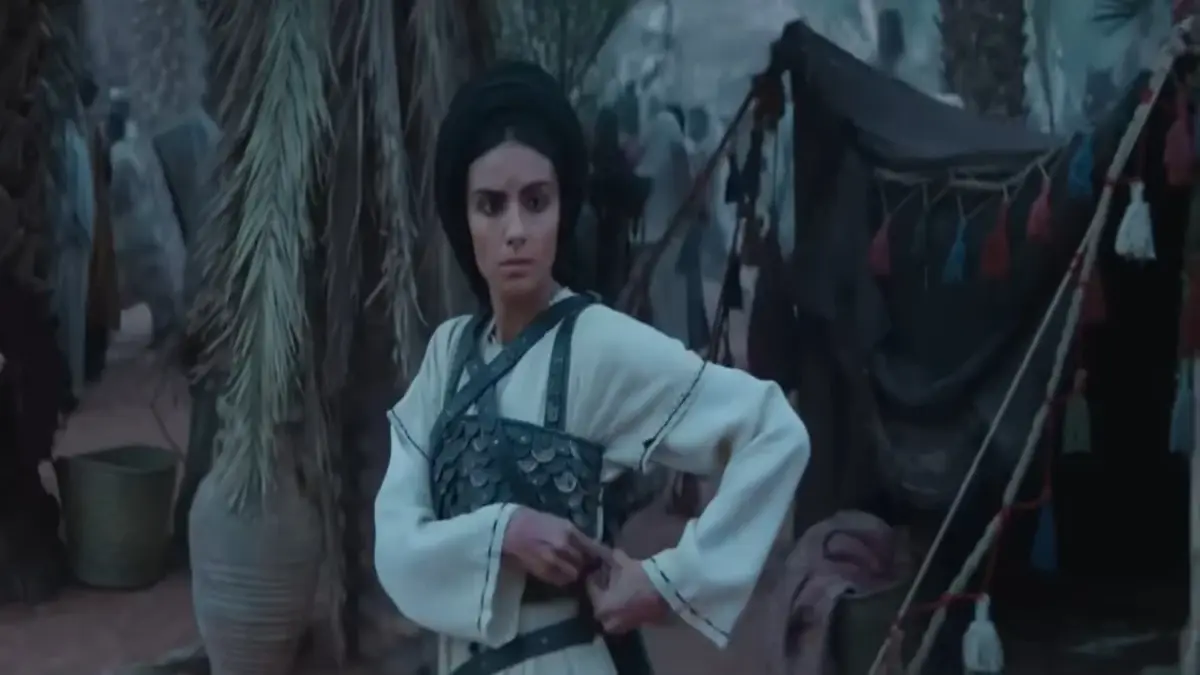
The official trailer for Desert Warrior has quickly captured attention across the international film community. With sweeping desert landscapes, dramatic battle sequences, and a compelling narrative rooted in Middle Eastern history, the film signals an ambitious attempt to blend Hollywood-scale storytelling with authentic regional perspectives.
Historical desert epics have long fascinated audiences from classics like Lawrence of Arabia to modern productions such as The Mummy. Yet Desert Warrior arrives at a moment when global cinema is shifting toward more culturally grounded narratives and international collaboration.
Filmed largely in Saudi Arabia, the project also reflects the country’s growing investment in film production through ambitious initiatives tied to regions like NEOM.
In this analysis, we break down the trailer’s visual storytelling, explore its historical themes, and examine why the film could mark a turning point for desert-based epic cinema.
The Rise of Desert Epics in Global Cinema
For decades, desert landscapes have served as powerful cinematic backdrops. The endless horizon, harsh climate, and cultural history offer filmmakers a unique canvas for storytelling.
Films such as Lawrence of Arabia demonstrated how the desert could become a character in itself representing both beauty and danger. More recently, productions like Dune revived interest in desert worlds through cutting-edge cinematography and immersive storytelling.
This shift aligns with the broader evolution of global filmmaking, where local authenticity and international collaboration increasingly go hand in hand.
Cinematography That Captures the Desert’s Power
One of the most striking aspects of the Desert Warrior trailer is its cinematography.
The trailer showcases:
- Vast golden dunes stretching beyond the horizon
- Nomadic encampments illuminated by firelight
- High-energy battle sequences unfolding in sandstorms
- Detailed costume design reflecting historical influences
The imagery suggests that filmmakers aimed to capture the desert environment as both majestic and unforgiving.
Cinematography in desert films often faces unique challenges intense sunlight, heat distortion, and unpredictable weather. However, when executed successfully, these conditions create visuals that feel raw and immersive.
The trailer hints at this immersive approach, emphasizing sweeping camera movements and wide establishing shots that place the audience directly inside the environment.
Honor, Survival, and Tribal Loyalty
While the trailer reveals only fragments of the plot, it strongly suggests themes rooted in:
- tribal alliances and conflicts
- honor and leadership
- survival in extreme environments
- resistance against external forces
These themes are common in historical epics but gain new relevance when explored through the lens of regional storytelling.
The desert environment itself reinforces these ideas. Survival requires unity, discipline, and resilience qualities often central to warrior narratives.
By combining these themes with high-scale production values, Desert Warrior appears to balance emotional storytelling with large-scale spectacle.
Cast and International Collaboration
The project reportedly features an international cast including actors such as Anthony Mackie, Ben Kingsley, and Aiysha Hart.
This mix of global talent reflects a broader trend in modern filmmaking: large productions increasingly blend Hollywood stars with regional actors to reach worldwide audiences.
The approach benefits both storytelling and cultural representation.
International stars bring global visibility, while regional actors contribute authenticity and deeper cultural understanding.
Saudi Arabia’s Emerging Film Industry
Another important aspect of Desert Warrior is where it was filmed.
In recent years, Saudi Arabia has made significant investments in the film industry as part of its broader cultural transformation initiatives.
Projects like NEOM aim to position the region as a hub for international media production.
For filmmakers, Saudi Arabia offers several advantages:
- vast untouched desert landscapes
- modern production infrastructure
- government incentives for international productions
The result is a growing list of films choosing the region as a filming destination.
If Desert Warrior succeeds globally, it could further accelerate this trend.
Authenticity in Costume and Production Design
Historical films live or die by the credibility of their world-building.
The trailer reveals significant attention to detail in areas such as:
- traditional armor and clothing
- desert camp architecture
- weapons and battle formations
- caravan travel sequences
Authenticity in these elements is essential for historical storytelling.
When audiences sense that filmmakers have carefully researched cultural and historical details, the narrative becomes more immersive and believable.
The Cultural Significance of Desert Narratives
Stories set in desert landscapes often explore deeper philosophical themes.
The desert represents both isolation and clarity. In literature and cinema, it frequently becomes a place where characters confront identity, leadership, and destiny.
In many ways, Desert Warrior seems positioned within this tradition.
Rather than focusing purely on spectacle, the film appears to use the desert environment to explore questions of loyalty, power, and cultural identity.
How the Trailer Builds Anticipation
Modern film marketing relies heavily on trailers to build anticipation.
The Desert Warrior trailer uses several classic techniques:
- Gradual reveal of the central conflict
- Quick cuts between battle sequences and emotional moments
- Dramatic musical score
- Wide landscape shots to establish scale
These elements create momentum while leaving enough mystery to encourage audiences to seek more information.
Could Desert Warrior Redefine Historical Epics?
The success of films like Gladiator demonstrated that audiences still crave historical storytelling when it is executed with scale and authenticity.
However, modern audiences also expect cultural nuance and global representation.
If Desert Warrior successfully combines cinematic spectacle with culturally grounded storytelling, it could become a defining example of the next generation of historical epics.
Final Thoughts
The trailer for Desert Warrior suggests a film that aims to merge epic action with meaningful storytelling rooted in Middle Eastern history and culture.
With powerful visuals, an international cast, and breathtaking desert cinematography, the film has the potential to capture the imagination of global audiences.
More importantly, it reflects a broader shift in cinema one where international collaboration and authentic regional narratives play a central role in shaping the future of storytelling.
If the final film delivers on the promise of its trailer, Desert Warrior could become one of the most visually striking desert epics of the decade.
SOURCE: IMDB, The Hollywood Reporter, Variety, Saudi Film Commission
Keep in Touch For More Updates: www.buzzwithriz.com
Table of contents
- The Rise of Desert Epics in Global Cinema
- Cinematography That Captures the Desert’s Power
- Honor, Survival, and Tribal Loyalty
- Cast and International Collaboration
- Saudi Arabia’s Emerging Film Industry
- Authenticity in Costume and Production Design
- The Cultural Significance of Desert Narratives
- How the Trailer Builds Anticipation
- Could Desert Warrior Redefine Historical Epics?
- Final Thoughts
