





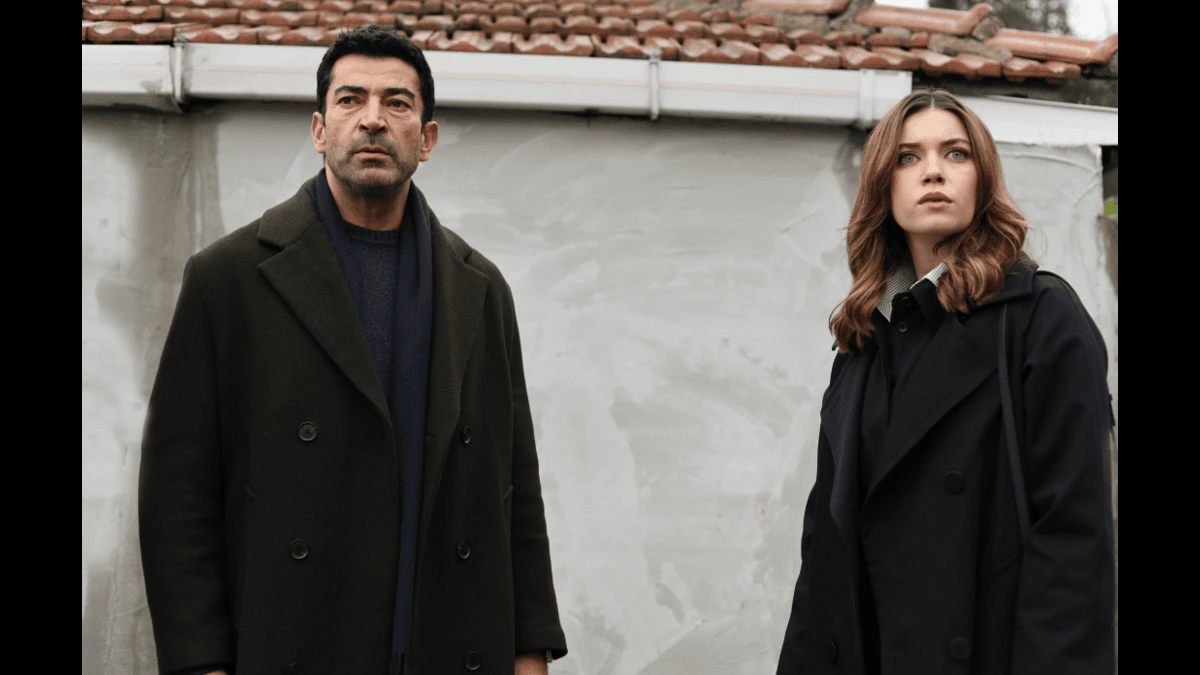
A.B.İ. Episode 4 Recap: When the Past Refuses to Stay Buried, I thought some Tv dramas or shows effects us like A.B.I, Some television episodes don’t just move the plot forward — they redefine the emotional center of a series. A.B.İ. Episode 4 is one of those turning points. What begins as a violent investigation into a shooting quickly transforms into a layered exploration of memory, loyalty, and inherited guilt.
This episode confirms what the series has been quietly suggesting from the beginning: the real danger isn’t only external it lives inside the family itself.
A.B.İ. Episode 4 English Translation of the Official Summary
Doğan and Yılmaz investigate the people behind the armed attack that took place in the container park, but the shooting of Çağla completely disrupts the balance. It becomes clear that Çağla herself was not the real target the envelope and photographs she was carrying were.
As Doğan digs deeper, he realizes that this dark structure has entangled the family far more deeply than they ever imagined. Despite her injury, Çağla refuses to step back. Determined to save Melek and expose the truth about Behram, she chooses to stand beside Doğan.
Meanwhile, Sinan and Altın panic as they try to erase traces of the past, while Didem follows every move closely. Armed with the footage she obtains, she confronts them with blackmail. As the family crisis intensifies, an old photograph that falls into Doğan’s hands opens the door to Behram’s hidden past, leading them to a nursing home.
At the same time, Melek faces a new nightmare in prison, and Genco’s unexpected visit brings fresh surprises.
A Turning Point in the Narrative: Why Episode 4 Matters
By Episode 4, A.B.İ. sheds any remaining ambiguity about its identity. This is no longer just a crime drama it is a multi-layered family tragedy disguised as a thriller.
The container park shooting functions as a narrative trigger rather than the main event. The revelation that information, not a person, was the real target reframes the entire conflict. This storytelling choice adds credibility and depth, aligning the series with high-quality international dramas that prioritize motive over spectacle.
Doğan’s Journey: From Escape to Confrontation
Doğan’s character arc reaches a crucial phase in this episode. Having built a new life to escape his family’s shadow, he is now forced to confront the truth he once ran from.
What makes Doğan compelling is not his strength, but his reluctance. Kenan İmirzalıoğlu portrays this internal struggle with remarkable restraint a man who knows that uncovering the truth may destroy what little peace he has left, yet cannot look away.
Episode 4 confirms that Doğan is no longer investigating events he is investigating his own bloodline.
Çağla: Courage Beyond the Wound
Çağla’s decision to stay involved despite being shot is one of the episode’s most powerful statements. She is not driven by recklessness, but by conviction.
Her insistence on standing beside Doğan elevates her role from supporting character to moral anchor. The narrative smartly avoids romanticizing her injury; instead, it highlights her clarity and resolve. Çağla understands that stepping back would allow the truth to be buried once again.
Sinan, Altın, and Didem: The Psychology of Guilt
While Doğan searches for truth, Sinan and Altın represent the opposite impulse erasure. Their frantic attempt to clean away evidence reflects not just fear of exposure, but fear of memory.
Didem’s role as observer-turned-manipulator introduces a new power dynamic. Her use of blackmail is not portrayed as villainous excess, but as a calculated response to systemic deception. In many ways, she becomes the episode’s quiet disruptor the one character who understands how information truly controls power.
The Photograph and the Nursing Home: Memory as Evidence
The old photograph that leads Doğan to a nursing home is one of Episode 4’s most symbolically rich moments. It reinforces a central theme of the series: the past does not disappear it waits.
Choosing a nursing home as a narrative destination is deliberate. It represents forgotten lives, suppressed truths, and memories that society chooses not to examine too closely. What Doğan is about to uncover there feels less like a revelation and more like an overdue reckoning.
Melek and Genco: Parallel Nightmares
While much of the episode unfolds through investigation, Melek’s storyline in prison reminds viewers that the consequences of silence are ongoing. Her impending trauma adds emotional urgency, grounding the mystery in human cost.
Genco’s unexpected visit introduces uncertainty not just about his intentions, but about who can still be trusted. In a series built on fractured loyalties, this moment feels intentionally destabilizing
Performances and Ensemble Strength
A.B.İ. continues to benefit from a deeply experienced cast. Alongside Kenan İmirzalıoğlu and Afra Saraçoğlu, the ensemble including Asude Kalebek, Sinan Tuzcu, Diren Polatoğulları, Serkay Tütüncü, and Tülay Bursa brings emotional credibility to even the quietest scenes.
The performances favor restraint over melodrama, reinforcing the show’s grounded realism.
Why A.B.İ. Stands Out in Turkish Television
Episode 4 underscores why A.B.İ. resonates beyond standard crime drama formulas:
- It treats family history as a living force
- It centers emotional consequence over shock value
- It trusts the audience to connect dots independently
These qualities align the series with globally respected narrative dramas, positioning it for international interest.
Final Editorial Note
A.B.İ. Episode 4 confirms that this story is not about crime alone it is about what families choose to hide, and what eventually demands to be seen. The episode doesn’t just raise questions; it removes the comfort of easy answers, setting the stage for revelations that will reshape everything that follows.
Source: ATV Turkey, IMDB
Keep in Touch For More Updates: www.buzzwithriz.com


1 Comment
Pingback: Yeraltı series episode 2 analysis: Love as a Weapon in the War - buzzwithriz.com