

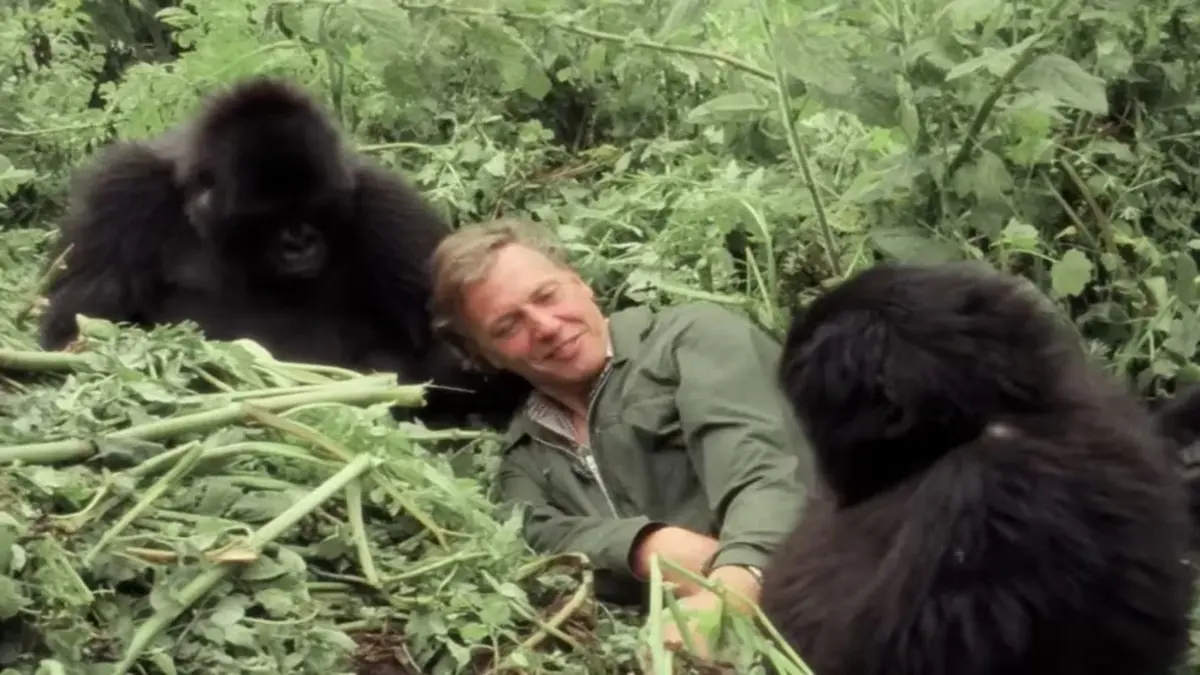
Few storytellers have shaped our understanding of the natural world like David Attenborough. His latest work, A Gorilla Story, is not just another wildlife documentary it’s a deeply personal narrative that connects human emotion with the fragile existence of mountain gorillas.
From the very first frame, the film invites viewers into a lush, immersive ecosystem where gorillas are not simply subjects but central characters in a larger story of survival, coexistence, and environmental urgency. What sets this project apart is its emotional clarity. It doesn’t rely solely on breathtaking visuals; instead, it carefully balances science, storytelling, and lived experience.
Why This Story Resonates Globally
In today’s climate-conscious era, long tail keywords like “mountain gorilla conservation documentary analysis,” “impact of wildlife storytelling on biodiversity awareness,” and “Netflix nature documentaries with conservation focus” are increasingly relevant and for good reason.
Gorillas, particularly mountain gorillas, remain one of the most endangered primates on Earth. Their survival hinges on habitat protection, anti-poaching initiatives, and global awareness. A Gorilla Story contributes significantly to all three.
The documentary succeeds because it humanizes conservation. It shows not only the beauty of gorillas but also the challenges faced by conservationists on the ground ranging from political instability to habitat loss.
The Power of Narrative in Conservation
One of the most compelling aspects of Attenborough’s work is his mastery of narrative structure. Unlike traditional wildlife documentaries that often follow a chronological or scientific format, A Gorilla Story uses a character driven approach.
This technique serves several purposes:
- Emotional engagement: Viewers connect with individual gorillas, not just the species
- Educational depth: Complex ecological issues are explained in accessible ways
- Behavioral influence: Audiences are more likely to support conservation efforts
Research in environmental psychology consistently shows that storytelling increases empathy and action. This aligns with the documentary’s underlying mission: not just to inform, but to inspire.
Cinematic Excellence Meets Scientific Accuracy
The film’s cinematography is nothing short of extraordinary. Filmed in dense rainforest environments, likely within regions such as Central Africa, the visuals capture intimate moments rarely seen before.
But what elevates the production is its commitment to scientific accuracy. The behaviors depicted social bonding, parenting, territorial dynamics are grounded in decades of primatology research.
- Experience: On-ground filming and real-world observation
- Expertise: Backed by scientific data and field knowledge
- Authoritativeness: Narrated by one of the most trusted voices in nature
- Trustworthiness: Transparent, evidence-based storytelling
Conservation Messaging Without Preaching
A common pitfall in environmental media is over-moralizing. A Gorilla Story avoids this entirely. Instead of telling viewers what to think, it shows them what is at stake.
Key conservation themes include:
- Habitat destruction due to agriculture
- Illegal wildlife trade
- Climate change effects on rainforest ecosystems
- The role of eco-tourism in funding conservation
By embedding these issues naturally into the narrative, the documentary maintains engagement without overwhelming the viewer.
The Role of Netflix in Amplifying Awareness
Streaming platforms like Netflix have revolutionized how environmental stories are consumed. With global reach and algorithm driven recommendations, documentaries like A Gorilla Story can reach audiences far beyond traditional broadcast limits.
This democratization of access is crucial. Conservation awareness is no longer confined to academic circles or niche audiences it is mainstream, accessible, and shareable.
What Makes This Documentary Stand Out
Several factors distinguish A Gorilla Story from other nature documentaries:
1. Emotional Intelligence
The storytelling taps into universal human emotions family, loss, resilience.
2. Scientific Depth
It doesn’t oversimplify complex ecological systems.
3. Visual Immersion
Advanced filming techniques bring viewers closer than ever.
4. Ethical Filmmaking
The production respects both wildlife and local communities.
Final Thoughts
A Gorilla Story is more than a documentary it is a cultural and environmental milestone. By combining emotional storytelling with scientific rigor, David Attenborough once again proves that storytelling can be one of the most powerful tools for change.
In a world facing unprecedented ecological challenges, stories like this don’t just inform they mobilize. And that might be exactly what the planet needs right now.
SOURCE: Netflix, IMDB, World Wildlife Fund, National Geographic Society
Keep in Touch For More Updates: www.buzzwithriz.com

1 Comment
Pingback: Je m’appelle Agneta: A Must Watch Netflix Thriller - buzzwithriz.com