

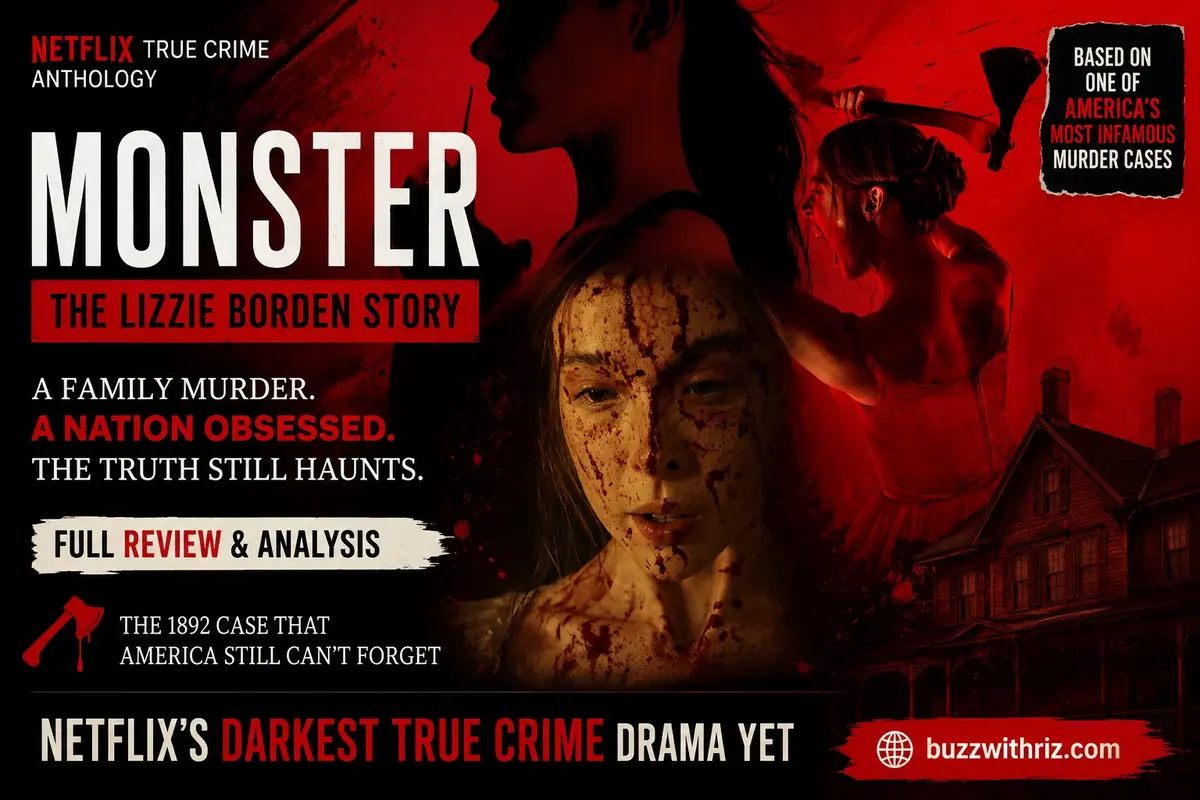
Netflix’s Monster franchise has built a reputation for transforming infamous true crime cases into compelling television. Following the cultural impact of previous installments, Monster: The Lizzie Borden Story takes audiences back to one of the most debated criminal cases in American history. The series explores the 1892 axe murders of Andrew and Abby Borden while examining the public fascination, media frenzy, and unanswered questions that continue to surround the case more than a century later.
As interest in true crime documentaries, historical crime dramas, and psychological thrillers continues to grow globally, Netflix’s latest entry arrives with significant anticipation. Rather than presenting a straightforward retelling, the series seeks to understand how a woman accused of a brutal crime became one of the most enduring figures in American criminal history.
Why the Lizzie Borden Case Still Fascinates Audiences
Few criminal cases have maintained public attention for as long as the Lizzie Borden murders. On August 4, 1892, Andrew Borden and his wife Abby were found murdered inside their Massachusetts home. Lizzie Borden, Andrew’s daughter, was charged with the killings but was ultimately acquitted.
Despite the acquittal, public suspicion never completely disappeared. Historians, legal experts, criminologists, and true crime enthusiasts continue to debate whether justice was served or whether the real killer was never identified.
The enduring appeal of the case stems from several factors:
- Contradictory witness accounts
- Limited forensic evidence
- Intense media coverage
- Social expectations surrounding women in the Victorian era
- A verdict that remains controversial today
These elements make the story ideal material for a modern Netflix crime drama.
Netflix’s Monster Formula Returns
One reason the Monster anthology has resonated with audiences is its willingness to move beyond simple crime reconstruction. Instead, the franchise examines the cultural impact of criminal cases and how society shapes narratives around guilt and innocence.
In Monster: The Lizzie Borden Story, viewers can expect:
Historical Authenticity
The production appears committed to recreating the atmosphere of late nineteenth-century America. Costume design, architecture, social customs, and courtroom settings contribute to a believable historical backdrop.
Psychological Storytelling
Rather than relying solely on shocking violence, the series focuses on psychology, family dynamics, social pressure, and public perception. This approach allows viewers to engage with the emotional and social dimensions of the case.
Modern Relevance
The themes explored remain surprisingly contemporary. Media sensationalism, gender bias, public judgment, and the relationship between celebrity and crime continue to influence how society views criminal cases today.
A New Perspective on a Familiar Story
What distinguishes this adaptation from previous portrayals is its effort to place Lizzie Borden within the broader context of her time.
Women in the Victorian era faced rigid expectations regarding behavior, independence, and family responsibility. The idea that a respectable woman could commit such a violent act challenged prevailing social norms. As a result, the public response was shaped not only by evidence but also by cultural assumptions.
The series appears to explore important questions:
- Was Lizzie judged differently because she was a woman?
- How did media coverage influence public opinion?
- Can historical truth ever be fully reconstructed?
- Why do some criminal cases become cultural obsessions?
By addressing these themes, Netflix elevates the story beyond conventional true crime entertainment.
Production Quality and Visual Style
Based on promotional footage, Monster: The Lizzie Borden Story embraces a visually striking aesthetic. The dominant use of red imagery creates an atmosphere of dread, danger, and psychological tension.
The cinematography reflects the franchise’s signature style:
- Dark visual symbolism
- Atmospheric lighting
- Intense close-up performances
- Suspense-driven storytelling
- Historical realism blended with modern dramatic techniques
This cinematic approach is likely to appeal to viewers who enjoy prestige crime dramas alongside traditional true crime programming.
The Growing Popularity of Historical True Crime
The success of productions centered on real criminal events reflects a broader trend in entertainment. Audiences increasingly seek stories that combine factual history with compelling drama.
Popular search trends show growing interest in:
- historical murder mysteries
- famous unsolved crimes
- true crime streaming series
- real-life criminal investigations
- psychological crime dramas
- courtroom history documentaries
- American murder cases
- Netflix crime anthologies
- criminal justice storytelling
- infamous historical crimes
Monster: The Lizzie Borden Story sits at the intersection of all these interests, making it one of Netflix’s most anticipated true crime releases.
Final Verdict
Monster: The Lizzie Borden Story has the potential to become one of the most discussed true crime series of the year. By revisiting a case that continues to divide historians and crime experts, Netflix offers viewers an opportunity to reconsider one of America’s most enduring mysteries.
Rather than providing definitive answers, the series appears focused on exploring ambiguity, perception, and the lasting power of unresolved questions. For fans of historical crime dramas, psychological thrillers, and true crime storytelling, this latest installment in the Monster anthology looks poised to deliver both entertainment and thoughtful analysis.
More than 130 years after the murders occurred, the Lizzie Borden case continues to spark debate. Netflix’s adaptation ensures that discussion will continue for a new generation of viewers.
SOURCE: Netflix, IMDB, Wikipedia
Keep in Touch For More Updates: www.buzzwithriz.com

1 Comment
Pingback: Percy Jackson Season 3 Teaser: Annabeth’s Capture & New Quest