

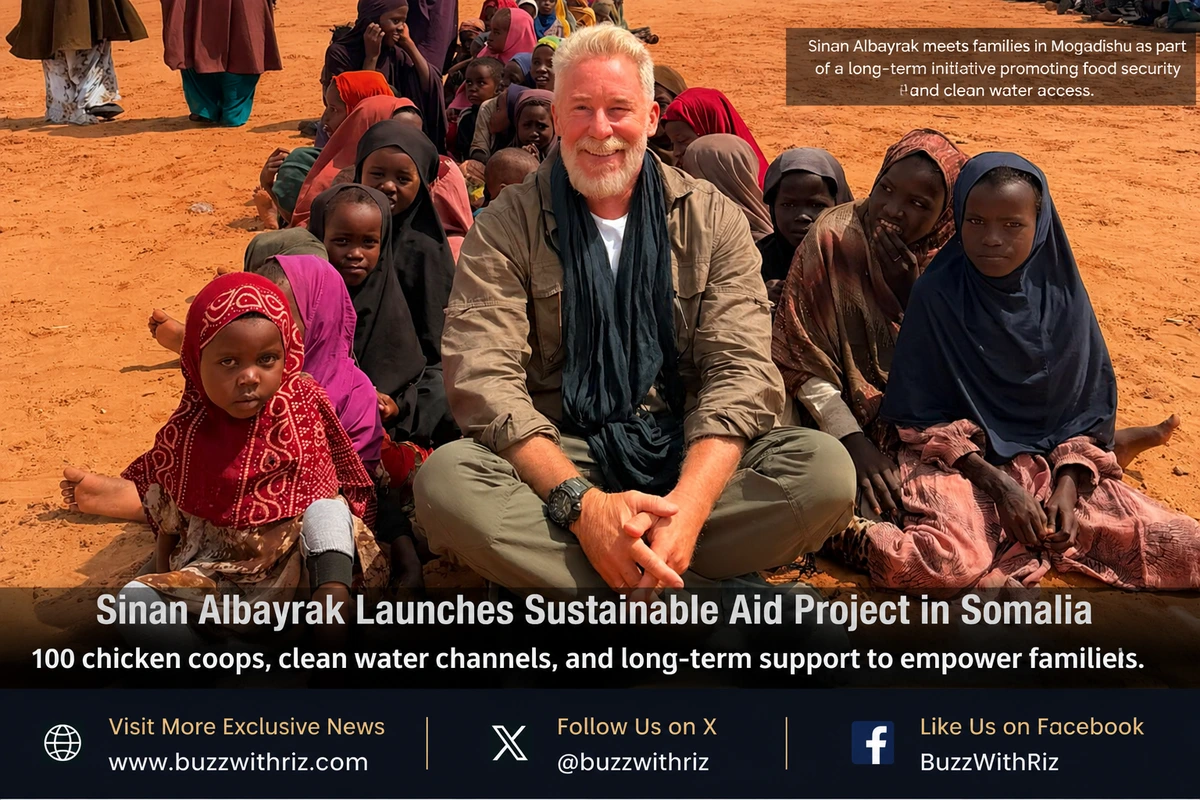
Turkish actor Sinan Albayrak launches a sustainable humanitarian project in Somalia, providing chicken coops, clean water, and long-term livelihood support for vulnerable families across Africa.
Sinan Albayrak Expands Sustainable Humanitarian Mission in Somalia with Long-Term Food Security and Clean Water Initiative
Humanitarian assistance is becoming more effective when it focuses on long-term solutions rather than temporary relief. Across Africa, many communities continue to face poverty, food shortages, limited access to clean water, and economic instability. While emergency aid remains essential, sustainable development projects are increasingly recognized as the key to helping vulnerable families build independent futures.
Turkish actor and humanitarian Sinan Albayrak has taken another meaningful step in this direction by supporting a sustainable social assistance initiative in Mogadishu, Somalia. Instead of providing one-time aid packages, the project aims to create permanent sources of food and income through livestock farming while also improving access to clean water.
The initiative represents a growing movement toward humanitarian projects that prioritize self-reliance, economic empowerment, and community resilience.
A Sustainable Vision Beyond Emergency Relief
During his visit to temporary tent settlements in Somalia’s capital, Mogadishu, Sinan Albayrak met with families, children, and local community members to better understand their daily challenges.
Working alongside a charitable organization, the project is centered on one simple but powerful idea: help families generate their own food and income instead of depending solely on external assistance.
The first phase of the program includes the construction of 100 chicken coops throughout the camp communities.
Rather than distributing food that may last only a few weeks, the poultry initiative allows families to:
- Produce fresh eggs regularly
- Raise chickens for sustainable food production
- Generate income through local markets
- Improve household nutrition
- Build long-term financial independence
This model transforms humanitarian aid into an investment in future stability.
Why Poultry Farming Can Transform Communities
Livestock-based livelihood programs have proven successful in many developing regions because they require relatively low investment while offering consistent returns.
Chicken farming provides several long-term advantages:
Reliable Food Supply
Eggs provide an affordable source of protein, improving nutrition for children and adults alike.
Regular Household Income
Families can sell surplus eggs or chickens within local markets, creating a dependable income stream.
Low Maintenance
Compared with larger livestock, chickens require fewer resources and adapt well to community-based farming.
Women’s Economic Participation
In many African communities, poultry farming creates valuable opportunities for women to manage household businesses and strengthen family finances.
Clean Water Remains a Critical Priority
Food security alone cannot solve humanitarian challenges.
Access to clean drinking water continues to be one of Somalia’s most urgent needs.
To address this issue, the project also includes the construction of water channels, designed to improve water accessibility for camp residents.
Reliable water infrastructure supports:
- Better sanitation
- Improved public health
- Agricultural sustainability
- Livestock care
- Reduced risk of waterborne diseases
The combination of food production and water access creates a more comprehensive development model than traditional relief efforts.
Starting in Somalia with Plans for Wider African Expansion
Although Somalia serves as the project’s first destination, organizers have already announced broader ambitions.
Future expansion is expected to include:
- Uganda
- Nigeria
These countries also face significant humanitarian and development challenges in many regions.
If successfully implemented, the model could become a scalable example of sustainable community development across multiple African nations.
Meeting Families on the Ground
During his visit, Sinan Albayrak spent time with children and families living in temporary shelters.
Rather than making a symbolic appearance, he emphasized the importance of creating programs that continue delivering benefits long after volunteers have returned home.
Speaking about the initiative, Albayrak highlighted that sustainable assistance offers communities dignity by giving them the opportunity to produce, work, and support themselves.
This philosophy reflects an important shift in modern humanitarian thinking.
The Global Shift Toward Sustainable Humanitarian Aid
International organizations increasingly support development programs that move beyond emergency relief.
Institutions including:
- United Nations Development Programme (UNDP)
- World Food Programme (WFP)
- UNICEF
- Food and Agriculture Organization (FAO)
have consistently promoted initiatives focused on:
- Food security
- Economic resilience
- Agricultural development
- Women’s empowerment
- Community-led growth
Projects like the one in Somalia align closely with these internationally recognized development priorities.
Why Somalia Still Needs Long-Term Support
Somalia has faced decades of challenges resulting from conflict, drought, displacement, and economic hardship.
Millions continue to require humanitarian assistance.
According to international humanitarian agencies, many families remain vulnerable due to:
- Climate-related droughts
- Food insecurity
- Limited employment opportunities
- Water shortages
- Internal displacement
While emergency assistance saves lives, sustainable livelihood programs help communities recover over the long term.
A Model Focused on Independence Rather Than Dependency
One of the most significant aspects of this initiative is its emphasis on independence.
Instead of creating long-term reliance on donations, families receive practical resources capable of generating ongoing benefits.
This approach encourages:
- Local entrepreneurship
- Household resilience
- Community ownership
- Economic participation
- Improved quality of life
Such programs often create ripple effects throughout surrounding communities as local markets grow and household incomes improve.
Humanitarian Leadership Beyond Entertainment
Public figures often use their visibility to raise awareness for important causes.
When celebrities actively participate in development projects rather than limiting their involvement to fundraising campaigns, they can attract greater international attention to humanitarian issues that might otherwise receive little media coverage.
Sinan Albayrak’s participation highlights how influential personalities can help connect global audiences with communities facing significant challenges.
Sustainable Development Is the Future of Humanitarian Assistance
Around the world, aid organizations are increasingly measuring success not only by the amount of assistance delivered but by the long-term impact created.
Projects that improve livelihoods, increase food production, expand clean water access, and strengthen local economies offer lasting benefits that extend well beyond immediate relief efforts.
The Somalia initiative demonstrates how relatively modest investments can generate meaningful improvements in daily life while laying the foundation for stronger, more resilient communities.
If successfully expanded into Uganda and Nigeria, the program could become an inspiring example of sustainable humanitarian development across Africa
Final Thought
Sinan Albayrak’s sustainable humanitarian initiative in Somalia represents a thoughtful approach to modern development assistance. By combining poultry farming with improved water infrastructure, the project seeks to empower families rather than simply provide temporary relief.
As humanitarian organizations increasingly focus on long-term resilience, initiatives like this offer valuable examples of how practical, community-based solutions can create lasting social and economic change.
Whether through food production, income generation, or improved access to clean water, sustainable development remains one of the most promising paths toward stronger and more self-sufficient communities across Africa.
Source
- Haber Global Türkiye (Original Turkish report)
- United Nations Development Programme (UNDP)
- UNICEF Somalia
- World Food Programme (WFP)
Keep in Touch For More Updates: www.buzzwithriz.com
