

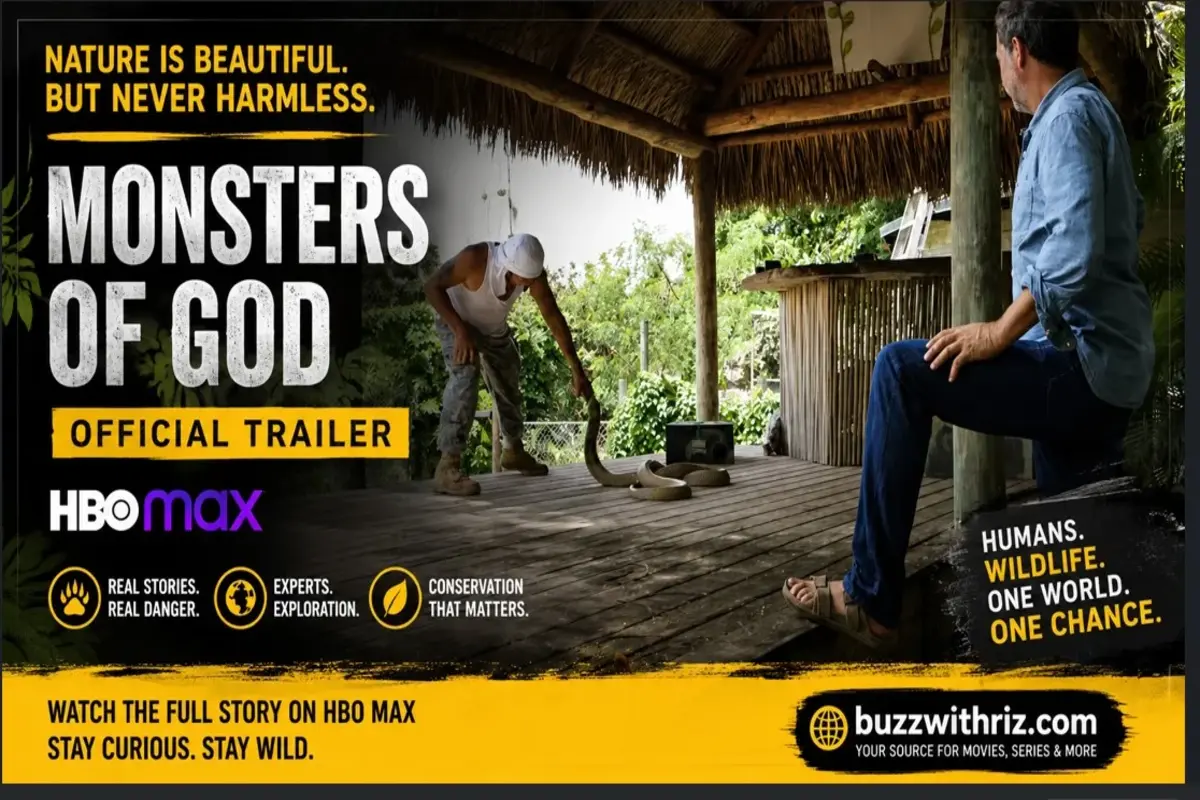
Nature documentaries have evolved far beyond scenic landscapes and slow-motion animal footage. Today’s best productions combine breathtaking cinematography with real-world challenges, scientific insight, and deeply human stories. HBO Max’s upcoming documentary Monsters of God appears to embrace that modern approach, judging by its gripping official trailer.
Instead of portraying wildlife as either heroes or villains, the trailer suggests a far more nuanced perspective. It introduces viewers to communities that share their environments with some of Earth’s most feared creatures from venomous snakes and massive crocodiles to apex predators capable of changing lives in an instant.
Yet the documentary doesn’t simply chase dramatic encounters. It appears to ask a larger question:
What happens when humans and dangerous wildlife are forced to coexist?
That question immediately separates Monsters of God from conventional wildlife programming. Rather than sensationalizing fear, the trailer hints at a thoughtful exploration of survival, conservation, cultural traditions, and ecological balance.
For viewers interested in documentaries that combine science with emotional storytelling, this HBO Max Original already looks like one of the platform’s most intriguing nonfiction releases.
A First Look at the Official Trailer
The trailer wastes little time establishing its tone.
Instead of relying on dramatic narration alone, it places audiences directly into environments where danger feels immediate. Dense jungles, remote villages, wetlands, rivers, and tropical forests become living characters throughout the preview.
One memorable sequence shows experienced wildlife handlers interacting with an enormous snake while observers maintain a cautious distance. Rather than presenting the animal as a monster, the scene demonstrates respect, experience, and understanding qualities that seem central to the documentary’s overall philosophy.
Throughout the trailer, every encounter carries an unmistakable message:
Nature deserves admiration but never underestimation.
Beautiful aerial shots contrast with tense close-up encounters, creating a visual rhythm that keeps viewers engaged while emphasizing how unpredictable the natural world can be.
More Than a Wildlife Documentary
One of the trailer’s biggest strengths is its apparent refusal to simplify complex issues.
Many wildlife productions focus almost exclusively on animal behavior. Monsters of God appears equally interested in people the researchers, indigenous communities, conservationists, rescue specialists, and local families who interact with these animals every day.
That human perspective transforms the documentary into something larger than a collection of dramatic wildlife encounters.
Instead, it becomes a story about coexistence.
Questions raised by the trailer include:
- Why do human-wildlife conflicts continue to increase?
- Can conservation protect both people and animals?
- How do local traditions shape relationships with wildlife?
- What role does climate change play in these encounters?
- Are humans becoming the greatest threat to biodiversity?
These themes suggest HBO Max is aiming for an intellectually engaging documentary rather than simple entertainment.
Stunning Cinematography Raises Expectations
Visually, Monsters of God looks exceptional.
The trailer showcases cinematic production values often associated with premium streaming documentaries.
Wide drone shots reveal untouched ecosystems before the camera shifts toward intimate wildlife moments captured with remarkable patience and precision.
The natural lighting, immersive sound design, and careful editing create an atmosphere that feels authentic rather than exaggerated.
Every location appears chosen not simply for beauty but because it tells part of a larger environmental story.
Whether viewers are watching reptiles glide through wetlands or researchers navigate dense rainforest terrain, the visuals reinforce how fragile and powerful these ecosystems truly are.
This attention to visual storytelling is likely to appeal not only to wildlife enthusiasts but also to documentary fans who appreciate high-end filmmaking.
Humanity’s Fear of Predators
The documentary’s title Monsters of God is intentionally provocative.
Historically, humans have described dangerous animals using words associated with monsters, demons, or supernatural threats.
But the trailer subtly challenges that perspective.
Instead of asking whether these creatures are monsters, it encourages audiences to reconsider why they inspire fear in the first place.
Predators kill because they must survive.
Humans often interpret those behaviors through emotion rather than ecology.
By examining that distinction, the documentary appears ready to explore one of conservation’s most important conversations:
Can fear coexist with respect?
That philosophical angle gives the project a deeper emotional foundation than many traditional nature documentaries.
Conservation at the Heart of the Story
Although the trailer contains moments of undeniable tension, its strongest message appears rooted in conservation.
Wildlife experts featured throughout the preview seem committed to protecting ecosystems rather than exploiting them for dramatic television.
The documentary hints at topics including:
Habitat loss
Expanding human development continues reducing natural habitats, forcing dangerous wildlife into closer contact with nearby communities.
Climate pressures
Changing weather patterns may be altering migration routes, breeding behavior, and predator-prey relationships across multiple ecosystems.
Biodiversity
Healthy ecosystems rely on predator species to maintain ecological balance.
Removing apex predators often creates cascading environmental consequences affecting countless other species.
Education
Many dangerous encounters occur because of misunderstanding rather than aggression.
Education remains one of conservation’s most effective tools for reducing unnecessary conflict.
These themes position Monsters of God as a documentary designed to inform audiences while encouraging meaningful conversations about environmental responsibility.
Why the Trailer Already Stands Out
Streaming platforms continue investing heavily in premium documentary programming, making competition increasingly intense.
What makes Monsters of God immediately distinctive is its balance.
Rather than relying solely on shocking animal encounters, the trailer blends:
- Scientific research
- Emotional storytelling
- Cultural perspectives
- Conservation science
- Wildlife behavior
- Cinematic filmmaking
- Human resilience
- Environmental awareness
That combination broadens its appeal beyond traditional wildlife audiences.
Viewers interested in ecology, anthropology, adventure, climate science, and documentary filmmaking all have reasons to be interested.
A Global Perspective
Another notable aspect of the trailer is its international scope.
Instead of focusing on one country or one species, Monsters of God appears to travel across diverse ecosystems where different cultures have learned to coexist with wildlife in remarkably different ways.
This global perspective is especially valuable because conservation challenges rarely stop at political borders.
Protecting biodiversity increasingly requires international cooperation, scientific collaboration, and local knowledge.
The documentary seems poised to highlight all three while telling compelling human stories that resonate far beyond the regions being featured.
Final Thoughts
Nature has always inspired both fascination and fear. Monsters of God reminds us that many of the creatures we label as “monsters” are simply vital components of ecosystems that have existed long before humans. By combining scientific exploration with powerful storytelling, HBO Max appears ready to deliver a documentary that challenges perceptions while celebrating the complexity of life on Earth.
For viewers seeking more than thrilling wildlife footage, this series promises an intelligent, visually stunning, and thought-provoking experience that highlights why conservation matters now more than ever.
SOURCE: HBO MAX, HBO A24, Warner Bros Discovery, IMDB, World Wildlife Fund (WWF)
Keep in Touch For More Updates: www.buzzwithriz.com
