

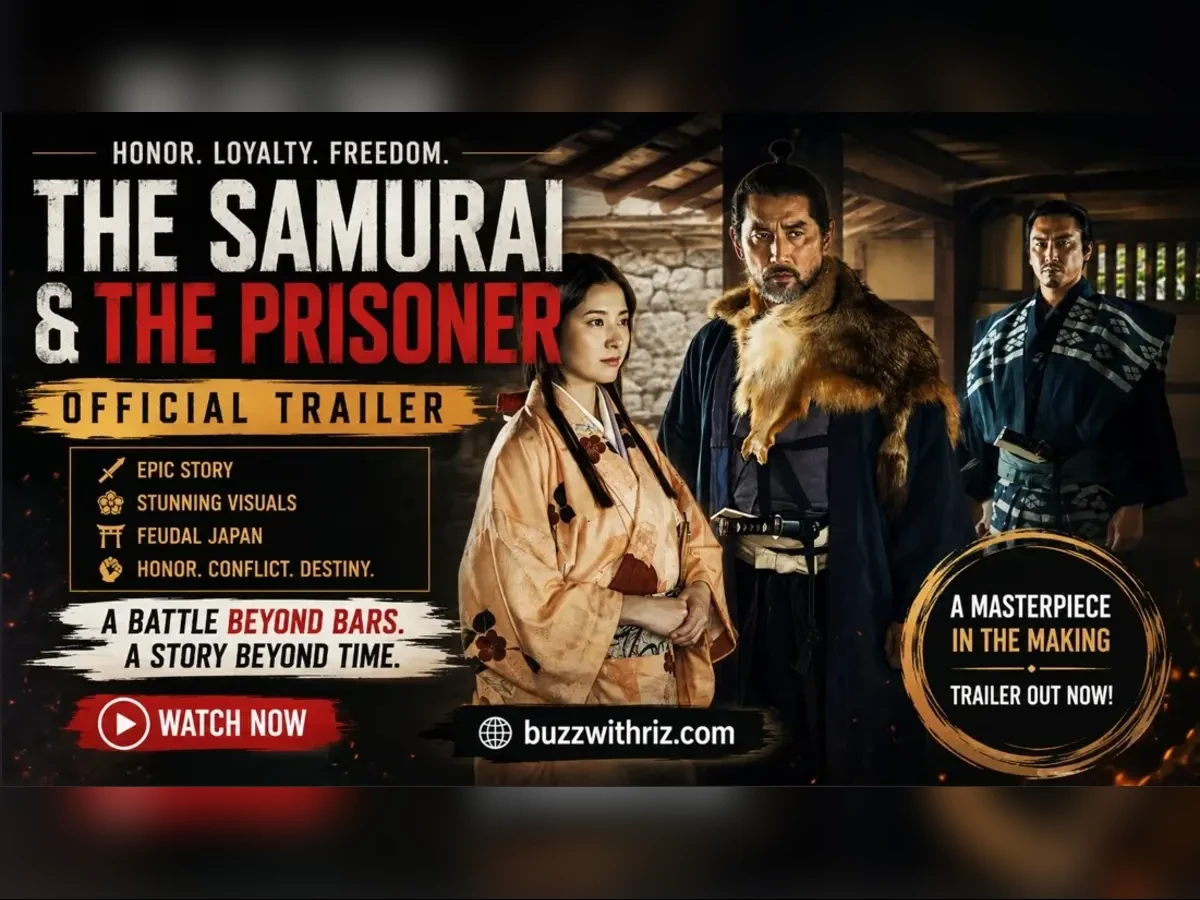
Historical samurai cinema has always held a unique place in world filmmaking. Beyond spectacular sword fights, the greatest samurai stories explore honor, sacrifice, justice, loyalty, and the difficult choices that define human character. The official trailer for The Samurai and the Prisoner immediately suggests that this upcoming historical drama aims to continue that tradition.
While the trailer intentionally reveals only fragments of the story, it establishes an emotionally charged atmosphere through elegant cinematography, carefully designed costumes, and restrained yet powerful performances. Rather than relying solely on action, it appears to prioritize character-driven storytelling a hallmark of the most respected samurai films ever produced.
This article examines what the trailer communicates, the cinematic techniques on display, the historical inspirations it evokes, and why this film has already generated interest among fans of historical action cinema.
A Trailer Built on Atmosphere Rather Than Spectacle
Many modern trailers overwhelm audiences with rapid editing and explosive action sequences. The Samurai and the Prisoner chooses a different path.
Instead, every frame appears carefully composed. Quiet moments dominate the trailer, allowing expressions, silence, architecture, and costume design to communicate tension before a single sword is drawn.
This measured pacing immediately recalls the storytelling philosophy found in classic Japanese cinema, where emotional conflict often outweighs physical confrontation.
Rather than simply promising action, the trailer promises a story.
Visual Storytelling That Respects Historical Aesthetics
One of the trailer’s strongest achievements is its production design.
Traditional wooden architecture, authentic clothing styles, muted earth-tone color palettes, and natural lighting all combine to create an immersive historical atmosphere.
Although trailers rarely confirm historical accuracy, these visual choices suggest careful attention to period aesthetics instead of exaggerated fantasy.
Every costume appears designed to communicate social status and personality without unnecessary ornamentation.
This visual restraint enhances authenticity.
Characters Already Feel Layered
Even without extensive dialogue, the trailer introduces three distinct personalities.
The central samurai projects authority through calm expressions rather than theatrical emotion. His fur-lined attire suggests military or political importance, while his posture reflects discipline and confidence.
The woman standing beside him appears equally significant. Rather than functioning as a background character, the trailer frames her with quiet dignity, hinting that her decisions may influence the narrative in meaningful ways.
The third character remains observant and reserved, creating additional dramatic tension without revealing his true intentions.
Good trailers raise questions instead of answering them.
This trailer succeeds.
The Meaning Behind “The Prisoner”
Perhaps the most intriguing aspect of the title lies in its ambiguity.
Who is the prisoner?
Is imprisonment physical?
Political?
Psychological?
Or does the title refer to the emotional burdens carried by every major character?
Samurai narratives frequently explore invisible prisons duty, honor, revenge, family expectations, and political loyalty. The title alone suggests the possibility that freedom may become one of the film’s central themes.
Bushido Beyond Sword Fighting
The greatest samurai films rarely celebrate violence.
Instead, they examine the ethical framework known as Bushido the moral code emphasizing courage, loyalty, honor, discipline, integrity, and self-sacrifice.
The trailer hints that these values may influence the story more than elaborate battle choreography.
If the finished film follows this direction, audiences can expect emotional conflicts that carry equal weight to physical confrontations.
That balance has long defined timeless samurai cinema.
Cinematography Worth Noticing
One element immediately stands out: composition.
Rather than constantly moving the camera, many shots allow characters to occupy carefully balanced spaces within traditional Japanese architecture.
Natural wood textures, open corridors, soft daylight, and restrained color grading create an elegant visual rhythm.
These choices encourage viewers to focus on subtle performances instead of visual excess.
Such confidence often reflects experienced filmmaking.
Costume Design Adds Narrative Depth
Historical costume design serves more than decorative purposes.
In the trailer, garments communicate hierarchy, personality, and emotional tone.
Layered robes, muted fabrics, and practical accessories reinforce the grounded realism of the setting.
The central samurai’s fur-lined garment distinguishes him from surrounding characters while subtly suggesting leadership or elevated status.
These visual details help establish narrative context without requiring exposition.
Why Samurai Stories Continue to Resonate Globally
Samurai films have never appealed solely because of swordsmanship.
Their enduring popularity stems from universal themes.
Questions surrounding justice, personal honor, sacrifice, leadership, betrayal, and redemption remain relevant regardless of cultural background.
Modern audiences continue to connect with stories that explore difficult moral choices.
If The Samurai and the Prisoner delivers on the emotional promise of its trailer, it may find appreciation well beyond fans of Japanese historical cinema.
Strengths Visible in the Official Trailer
Several strengths already distinguish the production:
- Elegant cinematography
- Authentic-looking production design
- Strong costume direction
- Restrained performances
- Excellent visual composition
- Historical atmosphere
- Character-focused storytelling
- Emotional tension
- Minimal reliance on spectacle
- High production values
These qualities create confidence without revealing excessive plot details.
Potential Audience
This film is likely to appeal to viewers who enjoy:
- Historical dramas
- Samurai cinema
- Japanese period films
- Character-driven storytelling
- Political intrigue
- Moral dilemmas
- Cinematic world-building
- Historical action
- Prestige international cinema
Final Thoughts
The official trailer for The Samurai and the Prisoner demonstrates confidence through restraint. Instead of relying on oversized action sequences, it introduces a world defined by atmosphere, discipline, and emotional complexity.
Its strongest qualities appear to be visual storytelling, carefully crafted production design, and performances that communicate far more through silence than dialogue.
While trailers can only provide a glimpse of the finished film, this one suggests a production interested in preserving the thoughtful traditions of samurai storytelling rather than simply modernizing them for spectacle.
For audiences who appreciate historical cinema grounded in character and atmosphere, The Samurai and the Prisoner has already become one of the more intriguing upcoming releases to watch.
SOURCE: Janus Films, Rotten Tomatoes, British Film Institute (BFI), The Hollywood Reporter, Japanese Film Database (JFDB)
Keep in Touch For More Updates: www.buzzwithriz.com
Table of contents
- A Trailer Built on Atmosphere Rather Than Spectacle
- Visual Storytelling That Respects Historical Aesthetics
- Characters Already Feel Layered
- The Meaning Behind “The Prisoner”
- Bushido Beyond Sword Fighting
- Cinematography Worth Noticing
- Costume Design Adds Narrative Depth
- Why Samurai Stories Continue to Resonate Globally
- Strengths Visible in the Official Trailer
- Potential Audience
- Final Thoughts

3 Comments
Pingback: The Doll Netflix Trailer Review
Pingback: The Uprising (2026) Official Trailer Breakdown
Pingback: Animol Official Trailer: Ashley Walters’ Gritty New Film Explained