

The arrival of a new Netflix original often generates excitement, but every so often a trailer emerges that sparks genuine curiosity rather than simply anticipation. The Last House, starring Greta Lee and Wagner Moura, appears to belong firmly in that category.
From its opening frames, the trailer establishes an unsettling atmosphere. Rather than relying on loud scares or rapid-fire action sequences, it builds tension through silence, expressions, and carefully composed visuals. The result is a psychological drama that feels intimate, mysterious, and emotionally charged.
For viewers searching for a thoughtful suspense film rather than conventional genre entertainment, The Last House may already be one of the most intriguing Netflix releases on the horizon.
Why The Last House Trailer Is Generating Early Buzz
One of the most striking aspects of The Last House is its restraint.
Modern streaming trailers often reveal too much. They outline major plot points, showcase climactic moments, and leave little room for mystery. In contrast, Netflix’s marketing strategy for The Last House appears refreshingly confident.
The trailer raises questions instead of answering them.
Who are these characters?
What exactly are they witnessing?
Why does the house itself feel like a central character?
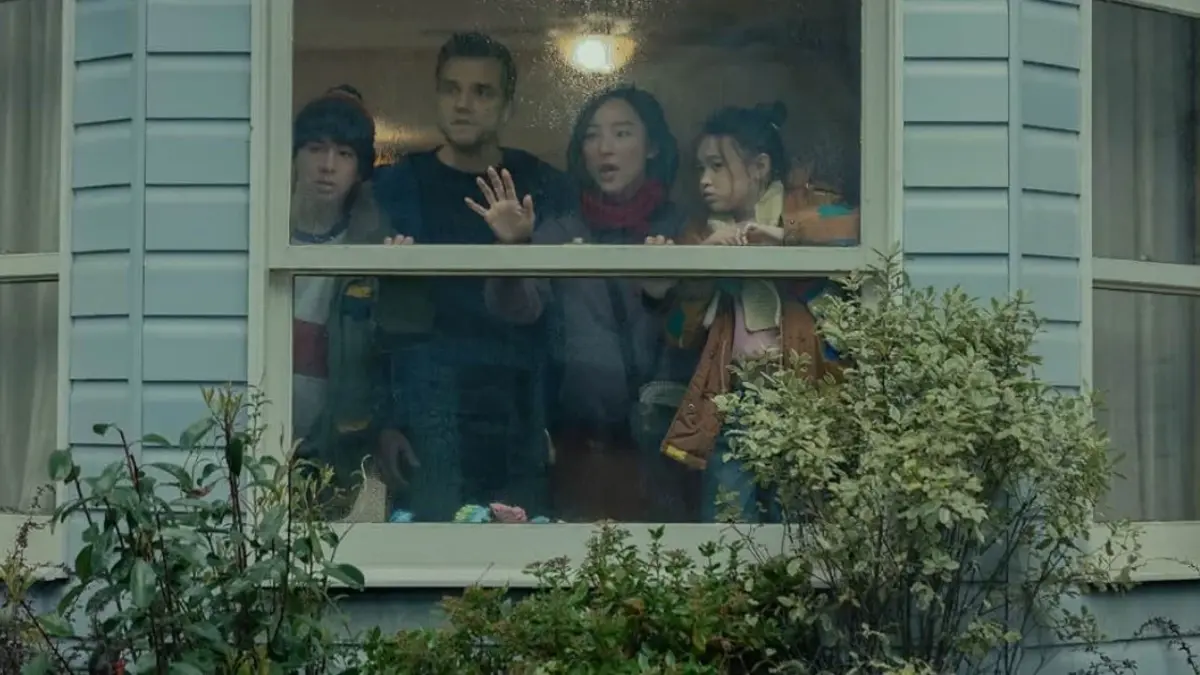
The scene shown in the promotional image perfectly reflects this approach. Four individuals stand behind a window, staring outward with concern, confusion, and fear. The audience becomes an observer watching observers, immediately creating psychological distance and intrigue.
This layered storytelling technique is frequently associated with prestige cinema and elevated suspense dramas.
Greta Lee Continues Her Remarkable Career Evolution
Greta Lee has become one of the most respected performers working today.
Following her acclaimed work in Past Lives, she demonstrated an extraordinary ability to communicate emotional complexity with subtle gestures and restrained performances. Her acting style often relies less on dialogue and more on presence.
That talent appears particularly suited to The Last House.
Throughout the trailer, Lee’s character seems caught between curiosity and dread. Even in brief moments, she conveys a sense of emotional depth that suggests the story may explore themes far beyond traditional thriller territory.
Her involvement alone significantly elevates expectations for the project.
Why Greta Lee Fits This Story
Several qualities make Lee an ideal choice for a psychological drama:
- Emotional authenticity
- Nuanced character portrayal
- Strong dramatic range
- Ability to anchor complex narratives
- Proven success in character-driven stories
These strengths are evident throughout the trailer’s most memorable moments.
Wagner Moura Brings Intensity and Gravitas
Wagner Moura remains one of the most compelling international actors working in film and television.
Known globally for powerful performances across crime dramas, political thrillers, and emotionally demanding roles, Moura brings immediate credibility to any project.
In The Last House, his character appears grounded, protective, and increasingly unsettled by unfolding events.
The trailer suggests a performance built on internal conflict rather than overt action. His facial expressions and body language hint at a man struggling to understand a situation that may be beyond rational explanation.
That emotional uncertainty is often the foundation of the strongest psychological thrillers.
A Story Rooted in Observation and Isolation
One of the trailer’s most fascinating elements is its emphasis on watching.
Characters repeatedly appear to be observing something outside their immediate environment. The window imagery is impossible to ignore.
In cinema, windows often symbolize:
- Separation
- Vulnerability
- Hidden truths
- Limited perspectives
- Psychological confinement
The promotional image reinforces these themes. The characters are physically protected inside a home, yet emotionally exposed.
This creates a compelling paradox.
They are safe, but they do not feel safe.
The best suspense stories frequently explore exactly this contradiction.
The House as a Character
The title itself deserves attention.
Why “The Last House” Matters
Houses in psychological dramas often represent more than physical structures.
They can symbolize:
- Family history
- Trauma
- Secrets
- Memory
- Survival
The trailer suggests that the home may function as a central narrative force rather than merely a setting.
The muted colors, confined spaces, and carefully framed interiors all contribute to a feeling that the house contains answers the characters have yet to discover.
If this interpretation proves accurate, The Last House could join a long tradition of films where architecture becomes an extension of character psychology.
Visual Storytelling That Elevates the Trailer
The cinematography immediately stands out.
Instead of relying on flashy effects, the trailer uses:
Natural Lighting
Many scenes appear illuminated by realistic interior light sources, creating intimacy and authenticity.
Muted Color Palette
Soft blues, grays, and subdued earth tones establish a melancholy atmosphere.
Framed Composition
Windows, doorways, hallways, and enclosed spaces repeatedly appear throughout the footage.
Controlled Camera Movement
The camera rarely feels chaotic. This deliberate pacing encourages viewers to absorb details and search for clues.
Together, these choices create a sense of unease without resorting to obvious horror conventions.
Themes Hidden Within the Trailer
Although Netflix has revealed relatively little about the plot, several themes appear to emerge.
Fear of the Unknown
The characters consistently react to unseen events.
Family and Community
The trailer focuses on interpersonal relationships rather than isolated individuals.
Perception Versus Reality
Viewers only receive fragments of information, creating uncertainty about what is actually happening.
Isolation in Familiar Spaces
The setting appears ordinary, making the unfolding tension even more effective.
These themes align closely with contemporary prestige thrillers that prioritize emotional intelligence over spectacle.
Why Psychological Thrillers Are Thriving on Streaming Platforms
The success of streaming has transformed audience expectations.
Many viewers now seek:
- Character-driven suspense
- Slow-burn storytelling
- Emotional complexity
- Thought-provoking narratives
- Prestige production values
The Last House appears designed for precisely this audience.
Rather than competing with blockbuster action films, it seems focused on creating a lingering emotional experience.
This approach often generates stronger critical reception and longer-term audience engagement.
What Makes The Last House Different From Typical Netflix Thrillers?
Netflix releases numerous thrillers every year, yet few generate sustained discussion.
The difference often comes down to execution.
Based on the trailer, The Last House distinguishes itself through:
Strong Lead Performances
Greta Lee and Wagner Moura bring proven dramatic credibility.
Atmospheric Storytelling
The trailer prioritizes mood over exposition.
Emotional Stakes
The characters appear deeply connected to the mystery.
Cinematic Presentation
The visual language feels closer to an independent prestige film than a conventional streaming release.
These elements suggest a project with ambitions beyond standard genre entertainment.
Early Predictions for Audience and Critical Reception
While trailers are never definitive indicators of quality, certain patterns tend to emerge.
Projects that generate positive early reactions typically feature:
- Distinctive visual identity
- Strong performances
- Clear thematic direction
- Effective marketing restraint
The Last House checks each of these boxes.
If the final film delivers on the promise of its trailer, it could become one of Netflix’s standout original dramas and a significant awards-season conversation piece.
Final Thought
The trailer for The Last House accomplishes something increasingly rare in modern entertainment marketing: it creates genuine intrigue.
Rather than overwhelming viewers with plot details, it invites interpretation. Instead of emphasizing spectacle, it focuses on character, atmosphere, and emotional tension.
Greta Lee and Wagner Moura appear perfectly cast, while the film’s visual style suggests a carefully crafted psychological drama built on mystery and human vulnerability.
For audiences seeking intelligent suspense, layered storytelling, and compelling performances, The Last House is already shaping up to be one of the most anticipated Netflix originals in recent memory.
SOURCE: Netflix, IMDB, Rotten Tomatoes, Wikipedia, Variety, The Hollywood Reporter, Deadline
Keep in Touch For More Updates: www.buzzwithriz.com
Table of contents
- Why The Last House Trailer Is Generating Early Buzz
- The House as a Character
- Why “The Last House” Matters
- Visual Storytelling That Elevates the Trailer
- Natural Lighting
- Muted Color Palette
- Framed Composition
- Controlled Camera Movement
- Themes Hidden Within the Trailer
- Fear of the Unknown
- Family and Community
- Perception Versus Reality
- Isolation in Familiar Spaces
- Why Psychological Thrillers Are Thriving on Streaming Platforms
- What Makes The Last House Different From Typical Netflix Thrillers?
- Strong Lead Performances
- Atmospheric Storytelling
- Emotional Stakes
- Cinematic Presentation
- Early Predictions for Audience and Critical Reception
- Final Thought

2 Comments
Pingback: The Truthers Netflix Trailer Analysis (2026)
Pingback: HOT SPOT (2026) Trailer Breakdown: Survival, Fear and Mystery