

The horror genre continues to evolve, moving beyond traditional jump scares into deeper psychological territory where fear is built through atmosphere, uncertainty, and emotional tension. The newly released She Saw Us (2026) trailer appears to embrace that approach wholeheartedly, delivering a haunting glimpse into a story that feels unsettling long after the footage ends.
From candlelit interiors and isolated characters to carefully framed imagery that suggests surveillance, guilt, and unseen forces, the trailer immediately captures attention. Rather than revealing too much, it invites viewers to question everything they see. For horror enthusiasts who appreciate layered storytelling, symbolic visuals, and slow-building dread, She Saw Us may already be one of the most anticipated releases of 2026.
In this comprehensive trailer analysis, we’ll examine the film’s atmosphere, visual language, possible themes, hidden clues, and why it has already generated discussion among horror fans worldwide.
The First Impression: Atmosphere Over Shock
One of the most striking aspects of the trailer is its commitment to atmosphere. Instead of relying on loud scares or rapid editing, the footage creates discomfort through stillness and ambiguity.
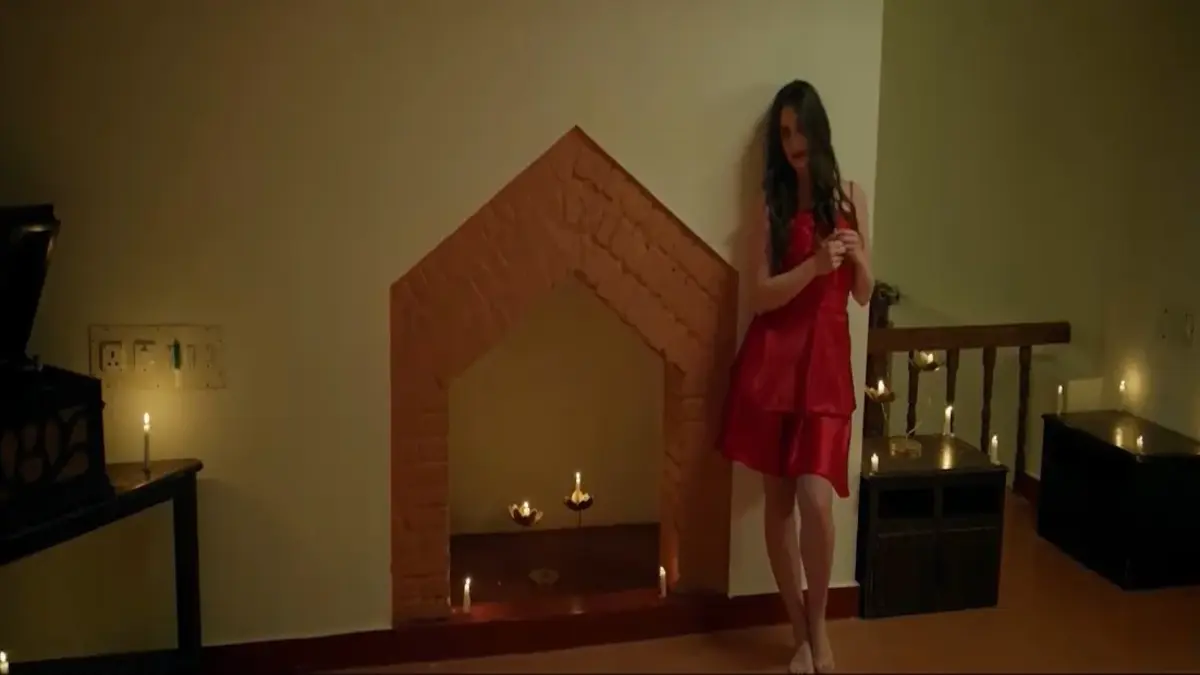
The scene featuring a woman standing alone in a dimly lit room surrounded by candles instantly establishes a sense of vulnerability. The red dress becomes a focal point against the muted surroundings, creating visual contrast while potentially serving a symbolic purpose within the narrative.
This approach aligns with modern psychological horror trends where tension emerges from uncertainty rather than immediate danger. Viewers are encouraged to anticipate something terrible without knowing exactly what that threat may be.
The result is a trailer that feels sophisticated, unsettling, and memorable.
Visual Symbolism Hidden in Plain Sight
Psychological horror often communicates through imagery rather than exposition, and She Saw Us appears to follow that tradition.
The Meaning Behind the Candles
Candles have long been associated with themes such as:
- Spiritual connection
- Ritualistic behavior
- Memory and mourning
- Protection from darkness
- Supernatural presence
The repeated candle imagery throughout the trailer may suggest a connection to loss, grief, or an attempt to ward off something unseen.
Rather than functioning as simple set decoration, the candles appear deliberately placed, creating an almost ceremonial atmosphere.
The Significance of the Red Dress
Color symbolism plays a major role in horror cinema.
The red dress may represent:
- Danger
- Guilt
- Trauma
- Desire
- Sacrifice
- Emotional vulnerability
The visual choice immediately separates the character from her surroundings, making her both the focal point and potential target of whatever force is operating within the story.
Psychological Horror Versus Supernatural Horror
One of the biggest questions raised by the trailer is whether She Saw Us is fundamentally a psychological thriller or a supernatural horror film.
The footage leaves room for both interpretations.
Several moments suggest a story rooted in psychological deterioration, where perception becomes unreliable and reality begins to fracture. Other scenes imply the presence of an external entity observing or influencing events.
This ambiguity is often the hallmark of effective horror storytelling.
Films that blur the line between mental distress and supernatural intervention tend to create stronger emotional engagement because audiences remain uncertain about what is actually happening.
The title itself She Saw Us further fuels speculation.
Who is “she”?
And who exactly are “us”?
The wording implies observation, awareness, and perhaps a hidden collective presence.
The Power of Unseen Threats
Great horror frequently understands that what remains unseen is often more frightening than what is revealed.
The trailer consistently suggests the existence of an observer without fully showing one.
This creates several layers of tension:
Fear of Being Watched
The feeling of surveillance is one of humanity’s most primal anxieties.
Throughout the trailer, camera placement often makes viewers feel like they are watching the characters from hidden locations.
This cinematic technique transforms the audience into participants within the narrative.
Fear of Isolation
Many scenes emphasize physical separation and emotional loneliness.
Large empty spaces, dim lighting, and minimal interaction create a sense of isolation that amplifies suspense.
Fear of the Unknown
The trailer refuses to provide clear answers.
Instead of explaining its mythology, it presents fragments of information that encourage interpretation.
This restraint is one of the reasons the trailer remains effective.
Cinematography That Enhances Dread
Modern horror audiences have become increasingly appreciative of visual storytelling, and She Saw Us appears to understand this shift.
Several cinematographic choices stand out:
Controlled Color Palette
The muted tones create emotional coldness while allowing specific colors particularly red and candlelight to dominate the frame.
Negative Space
Large empty areas within scenes create anticipation.
Viewers instinctively search for movement or hidden figures within the darkness.
Slow Camera Movement
Rather than frantic motion, the trailer favors deliberate pacing.
This technique encourages observation and increases tension because audiences expect something to emerge from the shadows.
Themes the Trailer May Be Exploring
Although plot details remain limited, several thematic possibilities emerge from the footage.
Trauma and Memory
The fragmented imagery suggests a narrative connected to past events.
Characters may be confronting memories that refuse to remain buried.
Observation and Judgment
The title and visual framing imply constant observation.
Whether supernatural or psychological, the concept of being watched appears central to the story.
Grief and Loss
The solemn atmosphere, candlelit imagery, and emotional isolation point toward themes of mourning and unresolved pain.
Identity and Perception
Psychological horror frequently examines how people understand themselves and the world around them.
The trailer hints that reality itself may become unstable.
Why Horror Fans Are Paying Attention
The horror genre has experienced a creative resurgence over the last decade.
Audiences increasingly seek films that combine scares with meaningful storytelling, and She Saw Us appears positioned within that movement.
The trailer demonstrates several qualities that modern horror fans value:
- Atmospheric storytelling
- Strong visual identity
- Psychological complexity
- Symbolic imagery
- Emotional depth
- Mystery-driven narrative
- Slow-burn tension
- Artistic cinematography
Rather than appearing formulaic, the film presents itself as a carefully constructed psychological experience.
Comparing She Saw Us to Contemporary Horror Trends
Recent successful horror films have shown that audiences appreciate ambiguity and layered narratives.
The trailer’s style reflects several contemporary trends:
Elevated Horror Elements
The focus on emotional themes and symbolism suggests a story with deeper thematic ambitions.
Character-Centered Fear
The horror appears tied to personal experiences rather than purely external threats.
Visual Storytelling
The trailer relies heavily on imagery instead of exposition.
Psychological Uncertainty
Viewers are encouraged to question what is real and what may exist only within a character’s perception.
These elements have become increasingly important within modern horror filmmaking.
Audience Expectations Going Into 2026
Based solely on the trailer, audiences can reasonably expect:
A Slow-Burn Narrative
The pacing suggests gradual tension rather than constant action.
Strong Psychological Themes
Mental and emotional conflict appears central to the story.
Symbolic Visuals
Many scenes seem designed for interpretation and discussion.
Mystery-Driven Storytelling
The trailer intentionally withholds answers, creating curiosity.
Emotional Horror
Fear appears connected to personal trauma and human vulnerability.
Final Thought
The most effective horror trailers leave audiences with questions rather than answers, and She Saw Us (2026) succeeds in doing exactly that.
Its combination of psychological tension, symbolic imagery, atmospheric cinematography, and unsettling mystery creates an immediate sense of intrigue. Instead of relying on predictable scares, the trailer builds discomfort through mood, visual storytelling, and the suggestion of unseen forces.
Whether the film ultimately reveals a supernatural entity, a psychological breakdown, or something entirely unexpected, its trailer demonstrates a clear understanding of modern horror’s strengths.
For fans of psychological thrillers, atmospheric horror, and thought-provoking genre storytelling, She Saw Us is already shaping up to be a title worth watching in 2026.
As more information becomes available, the film’s hidden meanings and narrative mysteries will undoubtedly continue to fuel discussion among horror enthusiasts worldwide.
SOURCE: Rotten Tomatoes, Box Office Mojo, The Numbers, IMDB, American Film Institute (AFI)
Keep in Touch For More Updates: www.buzzwithriz.com
Table of contents
- The First Impression: Atmosphere Over Shock
- Visual Symbolism Hidden in Plain Sight
- The Meaning Behind the Candles
- The Significance of the Red Dress
- Psychological Horror Versus Supernatural Horror
- The Power of Unseen Threats
- Fear of Being Watched
- Fear of Isolation
- Fear of the Unknown
- Cinematography That Enhances Dread
- Controlled Color Palette
- Negative Space
- Slow Camera Movement
- Themes the Trailer May Be Exploring
- Trauma and Memory
- Observation and Judgment
- Grief and Loss
- Identity and Perception
- Why Horror Fans Are Paying Attention
- Comparing She Saw Us to Contemporary Horror Trends
- Elevated Horror Elements
- Character-Centered Fear
- Visual Storytelling
- Psychological Uncertainty
- Audience Expectations Going Into 2026
- A Slow-Burn Narrative
- Strong Psychological Themes
- Symbolic Visuals
- Mystery-Driven Storytelling
- Emotional Horror
- Final Thought

1 Comment
Pingback: Kerem Bürsin & Michele Morrone at Milan Fashion Week