

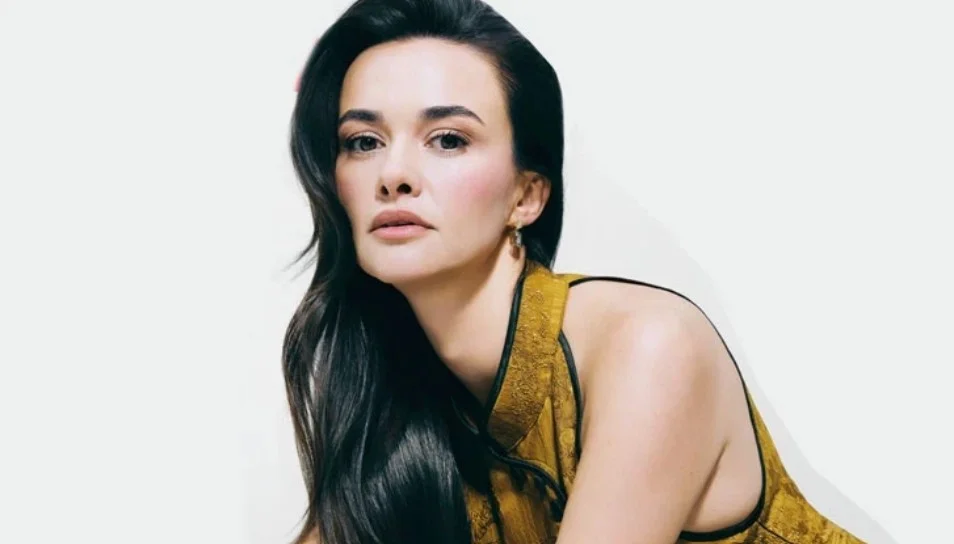
In today’s rapidly evolving world of Turkish television, few actresses have managed to balance emotional authenticity, professional versatility, and personal grace as naturally as Hande Soral. While audiences continue to praise her powerful performance in the darkly poetic drama series Gassal, her life beyond the camera has also become a source of fascination for fans across Turkey and internationally.
Actress, mother, wife, and artist Hande Soral represents a modern generation of performers who are redefining success not through noise or controversy, but through consistency, emotional intelligence, and quiet resilience.
In a deeply personal conversation released around Mother’s Day, Soral reflected on everything from her transformative role in “Gassal” to motherhood, self-doubt, ambition, and the emotional evolution she experienced after becoming a parent.
This feature explores not only her latest career chapter, but also why her story resonates with audiences searching for authenticity in an increasingly performative celebrity culture.
Hande Soral’s Role in “Gassal” Marks a Bold Career Shift
When Hande Soral first received the script for “Gassal,” the series had not yet aired. Without public expectations or social media buzz influencing her judgment, she approached the project purely as an actress searching for meaningful storytelling.
That decision would become one of the most artistically significant choices of her recent career.
The Turkish drama immediately stood out because of its unconventional premise, visual identity, and emotional depth. Unlike many mainstream productions, “Gassal” dives into themes society often avoids discussing openly: death, grief, ritual, and emotional vulnerability.
Soral portrays a mortician a role rarely explored in Turkish television, particularly through a female perspective.
What fascinated her most was not only the profession itself but also the contrast within the series’ visual world. Instead of presenting death through cold realism, the production uses vibrant colors, striking wardrobe choices, and surreal aesthetics to create emotional contrast.
The character wears pink aprons, yellow boots, and works inside a gold-toned morgue details that transform the atmosphere from bleak to strangely human and emotionally layered.
For viewers familiar with Turkish streaming dramas and modern psychological storytelling, “Gassal” feels refreshingly original.
Preparing for a Difficult and Emotionally Complex Character
To portray the role authentically, Hande Soral worked closely with a real female mortician who explained the burial preparation process step by step using a mannequin.
The actress admitted she had never previously witnessed the procedures involved in preparing bodies after death. Like many people, her experience with mortuaries had always remained distant and emotionally guarded.
That preparation became essential in helping her understand the emotional neutrality required within such a profession.
Interestingly, Soral explained that while filming most scenes, she remained emotionally detached because she focused on the technical side of acting. However, one particular scene involving the washing of a child’s body deeply affected her.
That emotional reaction highlights an important aspect of her performance style: grounded realism rather than exaggerated drama.
In many ways, this approach aligns with why Turkish television continues gaining global popularity. Audiences increasingly gravitate toward performances that feel psychologically truthful instead of theatrically polished.
The Self-Protection Mechanism Behind Hande Soral’s Public Persona
One of the most revealing moments of the interview came when Hande Soral addressed how people often misinterpret her personality.
According to the actress, many assume she is distant, cold, or overly reserved when they first meet her. In reality, she describes those emotional boundaries as a “self-protection mechanism.”
Entering the entertainment industry at only 18 years old forced her to develop emotional discipline early in life.
For women working in television and cinema, especially in highly visible industries, maintaining personal boundaries often becomes essential for survival. Soral openly acknowledged that these invisible walls were never about arrogance but about protecting herself emotionally and professionally.
That honesty adds another dimension to her public image.
In an entertainment landscape dominated by hyper-visibility and social media performance, restraint can often be misunderstood. Yet Soral’s ability to preserve privacy while remaining emotionally accessible on screen may actually explain her enduring credibility.
Why Hande Soral Believes Fear Slowed Her Career Growth
Perhaps the most introspective part of the conversation centered around ambition and self-confidence.
Looking back on her younger years, Soral admitted she struggled to recognize her own success. Even when audiences praised her performances or projects gained popularity, she rarely allowed herself to internalize those achievements.
Instead, perfectionism and fear shaped many of her career decisions.
She described herself as more timid in the past someone whose fears frequently outweighed courage. While humility can be admirable, Soral now believes that failing to acknowledge her accomplishments prevented her from taking bigger creative risks earlier in her career.
This perspective resonates strongly with many professionals, particularly women navigating competitive industries.
Success often requires not only talent, but also the willingness to emotionally accept visibility, recognition, and growth.
Today, Hande Soral appears far more open to experimentation. She openly expressed her desire to shock audiences with transformative roles, dramatic visual changes, and characters that challenge expectations.
She even stated she would shave her head completely for the right role if the project truly inspired her artistically.
That mindset reflects a performer entering a new creative era one driven less by fear and more by curiosity.
Motherhood Changed Hande Soral’s Perspective on Life
Away from cameras and film sets, motherhood has profoundly reshaped Soral’s worldview.
The actress shares a son, Ali, with her husband, actor İsmail Demirci, and she describes becoming a mother as one of the most transformative experiences of her life.
Before having a child, Soral loved adrenaline-filled activities and extreme sports. Fear rarely influenced her decisions. After Ali’s birth, however, her thinking shifted dramatically.
Now, she considers safety, health, and long-term responsibility differently.
Her comments reveal a universal emotional transition many parents experience: the realization that life decisions no longer affect only oneself.
As she explained, “People start thinking for two people now.”
That simple sentence captures the emotional maturity motherhood often brings not through sacrifice alone, but through expanded awareness.
Family Life With İsmail Demirci
Hande Soral and İsmail Demirci are frequently described as one of Turkey’s most grounded celebrity couples.
Unlike many public relationships shaped by spectacle, theirs appears rooted in balance, mutual trust, and emotional stability.
Soral explained that although both work in acting, they approach projects differently. Demirci tends to become emotionally attached to exciting characters, while she focuses more analytically on the broader creative picture.
This difference allows them to balance each other professionally.
They also critique each other’s work honestly, especially during project selection phases. Yet despite sharing the same profession, they avoid making acting the center of their relationship.
That emotional separation likely contributes to the relationship’s stability.
When discussing love, Soral avoided dramatic declarations. Instead, she described their relationship as “grounded,” emphasizing trust and reliability over performative romance.
Her most meaningful statement was simple: she knows İsmail is the person she can fully rely on.
In celebrity culture, where relationships are often presented through exaggerated narratives, that emotional realism feels refreshing.
Parenting Styles and Life After Having a Child
The actress also shared humorous insights into parenting dynamics at home.
Although the couple originally planned for İsmail Demirci to play the “strict parent,” reality unfolded differently. Soral now describes herself as the more disciplined figure in the household, while her husband tends to be softer and more flexible.
Like many new parents, their anxieties evolved over time.
Initially, Demirci was the more anxious parent during Ali’s infancy. Later, those concerns gradually shifted toward Soral herself.
Parenthood, she explained, completely transformed their daily conversations, priorities, and future planning.
Their son naturally became the center of family life.
This openness about the realities of parenting including anxiety, emotional adjustment, and changing dynamics makes Soral particularly relatable to modern audiences balancing careers and family responsibilities.
Social Media, Public Criticism, and Emotional Boundaries
One striking aspect of the interview was Soral’s attitude toward social media criticism.
Unlike many celebrities who engage directly with online commentary, she intentionally avoids reading comments altogether.
According to her, the “keyboard warrior mentality” lacks sincerity and emotional value. Rather than allowing anonymous opinions to shape her emotional state, she chooses distance.
This perspective reflects growing awareness around mental well-being in the entertainment industry.
Constant digital exposure can easily become psychologically exhausting, especially for public figures balancing family life, professional expectations, and public scrutiny.
Soral’s approach demonstrates emotional discipline rather than avoidance.
Why Hande Soral’s Story Resonates Globally
International audiences increasingly connect with Turkish actors not only because of compelling dramas, but because many performers communicate emotional honesty rarely seen in celebrity culture today.
Hande Soral’s appeal lies in that authenticity.
She speaks openly about fear, insecurity, ambition, motherhood, discipline, emotional protection, and artistic curiosity without trying to manufacture perfection.
Her career journey reflects something larger than television success alone.
It reflects growth.
From a cautious young actress uncertain of her own achievements to a confident performer eager to transform herself artistically, Soral represents a modern creative identity shaped by resilience rather than image.
And as “Gassal” continues drawing attention, audiences are discovering not only a fascinating character but also an actress entering one of the most compelling phases of her career.
Final Thoughts
Hande Soral’s story is ultimately about transformation.
Professionally, she continues pushing herself toward more daring and emotionally complex roles. Personally, motherhood has reshaped her priorities, softened certain fears, and deepened her understanding of responsibility.
Yet throughout all these changes, one quality remains consistent: authenticity.
In an era where celebrity narratives often feel heavily curated, Soral’s honesty stands out. Whether discussing insecurity, parenting, artistic ambition, or emotional boundaries, she communicates with the calm self-awareness of someone who has gradually learned to trust her own voice.
That may be exactly why audiences continue connecting with her work not simply because she performs characters convincingly, but because she speaks as a real person first.
SOURCE: Hurriyet, IMDB, TRT, Netflix Turkish Series Collection
Keep in Touch For More Updates: www.buzzwithriz.com
Table of contents
- Hande Soral’s Role in “Gassal” Marks a Bold Career Shift
- Preparing for a Difficult and Emotionally Complex Character
- The Self-Protection Mechanism Behind Hande Soral’s Public Persona
- Why Hande Soral Believes Fear Slowed Her Career Growth
- Motherhood Changed Hande Soral’s Perspective on Life
- Family Life With İsmail Demirci
- Parenting Styles and Life After Having a Child
- Social Media, Public Criticism, and Emotional Boundaries
- Why Hande Soral’s Story Resonates Globally
- Final Thoughts

1 Comment
Pingback: Sena Mia Kalıp Joins Altı Üstü İstanbul as Melek | ATV Drama