

Adapting a beloved video game franchise is never easy. Fans want fidelity, newcomers need clarity, and critics expect ambition. With Fallout Season 1 Episode 1, titled “The End,” Prime Video walks into that challenge fully aware of the stakes and surprisingly, it doesn’t flinch.
This premiere isn’t just an introduction. It’s a thesis statement.
Rather than rushing to spectacle, Fallout takes its time establishing tone, moral ambiguity, and the strange emotional gravity that has always defined the franchise. From the opening moments, the episode signals that this is not a shallow nostalgia project. It’s a story about survival, identity, and what remains when civilization collapses.
As a long-time observer of post-apocalyptic storytelling and media adaptations, this episode stands out for one simple reason: it trusts the audience.
The World Before the World Ends: Setting the Fallout Tone
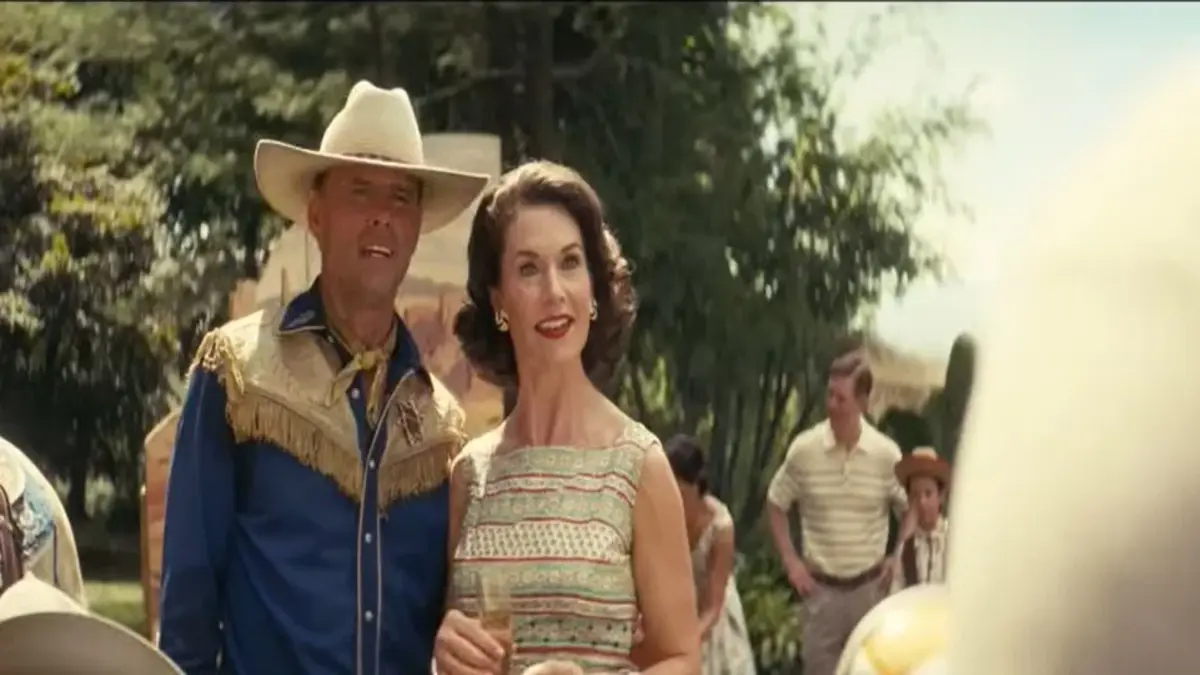
One of the smartest creative decisions in Episode 1 is how it frames the pre-apocalypse world. Instead of treating the past as a throwaway prologue, “The End” uses it as emotional contrast.
The aesthetic is intentionally polished bright colors, cheerful optimism, and cultural denial layered over looming catastrophe. This isn’t accidental. It mirrors the core satire that made Fallout iconic: a society smiling through its own extinction.
Why This Works
- It grounds the series emotionally
- It reinforces Fallout’s retro-futuristic identity
- It adds tragic irony rather than cheap shock
This approach aligns with how the original Fallout games used environmental storytelling rather than exposition dumps. Fans will recognize the DNA immediately, while new viewers aren’t alienated.
Character Introductions Without Hand-Holding
Episode 1 introduces multiple perspectives without forcing immediate alignment or moral clarity. That restraint is rare and refreshing.
Instead of telling us who to root for, Fallout lets behavior, choices, and silence do the work. The writing avoids modern genre pitfalls like over-explaining lore or inserting artificial “viewer surrogate” dialogue.
A Few Notable Strengths
- Dialogue feels lived-in, not theatrical
- Characters react like people, not plot devices
- Motivations are hinted at, not spelled out
This narrative confidence is a strong signal that the series understands long-form storytelling not just episodic spectacle.
Visual Storytelling: A Wasteland With Purpose
Visually, “The End” balances scale with intimacy. Yes, there are wide shots and production value moments, but the episode consistently returns to small human details: facial reactions, body language, and environmental clues.
Rather than overwhelming the viewer with CGI chaos, the show opts for selective restraint.
Cinematic Choices That Stand Out
- Natural lighting over hyper-stylized filters
- Practical set design over digital excess
- Framing that emphasizes isolation and tension
This approach echoes prestige television more than blockbuster adaptation and that’s a compliment
Themes Introduced in Episode 1
Even in its first hour, Fallout establishes thematic pillars that will clearly carry through the season.
1. The Illusion of Control
The episode repeatedly shows systems designed to protect people ultimately failing them. Whether social, technological, or ideological, nothing is foolproof.
2. Survival vs. Humanity
Surviving is not framed as heroic by default. The episode raises uncomfortable questions: What do you sacrifice to stay alive? And who decides the cost?
3. Legacy of Choices
Decisions made before the catastrophe echo long after. Fallout isn’t just about nuclear devastation—it’s about consequences.
These themes align directly with the franchise’s legacy while still feeling timely and relevant.
Respecting the Source Without Being Trapped by It
One of the biggest fears surrounding Fallout was over-reliance on fan service. Episode 1 avoids that trap.
Yes, longtime fans will notice familiar elements, design cues, and tonal callbacks but none of them interrupt the narrative. Nothing exists only to be recognized.
That balance is critical for adaptation longevity.
A good adaptation doesn’t recreate moments it recreates meaning.
Pacing and Structure: A Confident First Step
“The End” doesn’t rush. And that’s intentional.
Rather than cramming world-building into dense exposition, the episode allows the setting to breathe. This slower pace may surprise viewers expecting constant action, but it pays off in immersion.
From a structural standpoint:
- Act transitions feel organic
- Emotional beats are earned
- The ending invites curiosity without manipulation
This is not a cliffhanger episode it’s a foundation episode.
Critical Perspective: Where Episode 1 Could Improve
No premiere is perfect, and Fallout is no exception.
A few areas may challenge certain viewers:
- The tonal shifts may feel subtle rather than dramatic
- Some motivations remain intentionally opaque
- Viewers unfamiliar with Fallout may need patience
However, these are deliberate creative choices, not structural flaws. The episode prioritizes longevity over instant gratification.
Final Verdict: A Promising Beginning
Fallout Season 1 Episode 1 doesn’t beg for attention. It earns it.
By trusting its audience, honoring its source, and committing to a mature narrative tone, “The End” proves that this series is built for the long haul not just opening-week buzz.
If the rest of the season maintains this level of discipline and storytelling clarity, Fallout could become one of Prime Video’s most respected adaptations to date.
Source: Prime Video, You tube
Keep in Touch For More Updates: www.buzzwithriz.com
